Origin
The Braford breed was created to provide a consistent and efficient product for beef production. The breed was created by crossing a Hereford bull with a Brahman cow. They carry the characteristics of both breeds. This was first done by Partin and Hudgins, Alto Adams Jr., in Florida in 1947. Several attempts were needed to obtain the correct genetics, as the first bulls suffered from hoof and sclera problems and were not accustomed to the Florida climate.
They began experimenting with various types of Brahman-Hereford bulls. Eventually, he identified Braford bulls that were producing calves that met his needs, and he used these bulls and their offspring to form what is recognized as the foundation herd of the Braford breed in the United States. Basing the selection of bulls on weaning and yearling weights, allowing natural selection to eliminate calving problems, Adams Ranch Brafords improved over the years to such an extent that Adams Ranch began to consider the development and recognition of the breed.
There is also a separate bloodline in Australia. The Australian Braford breed was developed in Queensland between 1946 and 1952. It is now a stabilized breed with approximately 50% Hereford and 50% Brahman genetic background.
The Braford breed in Brazil is the result of intense work by breeders, researchers, technicians, and directors of this Association. In 1993, the Ministry of Agriculture, Livestock and Supply recognized it as a breed in formation. Ten years later, it obtained its official recognition, published in Ordinance No. 587 of June 5, 2003. However, its formation in the southern Brazilian fields began at least 30 years before the official recognition.
Features
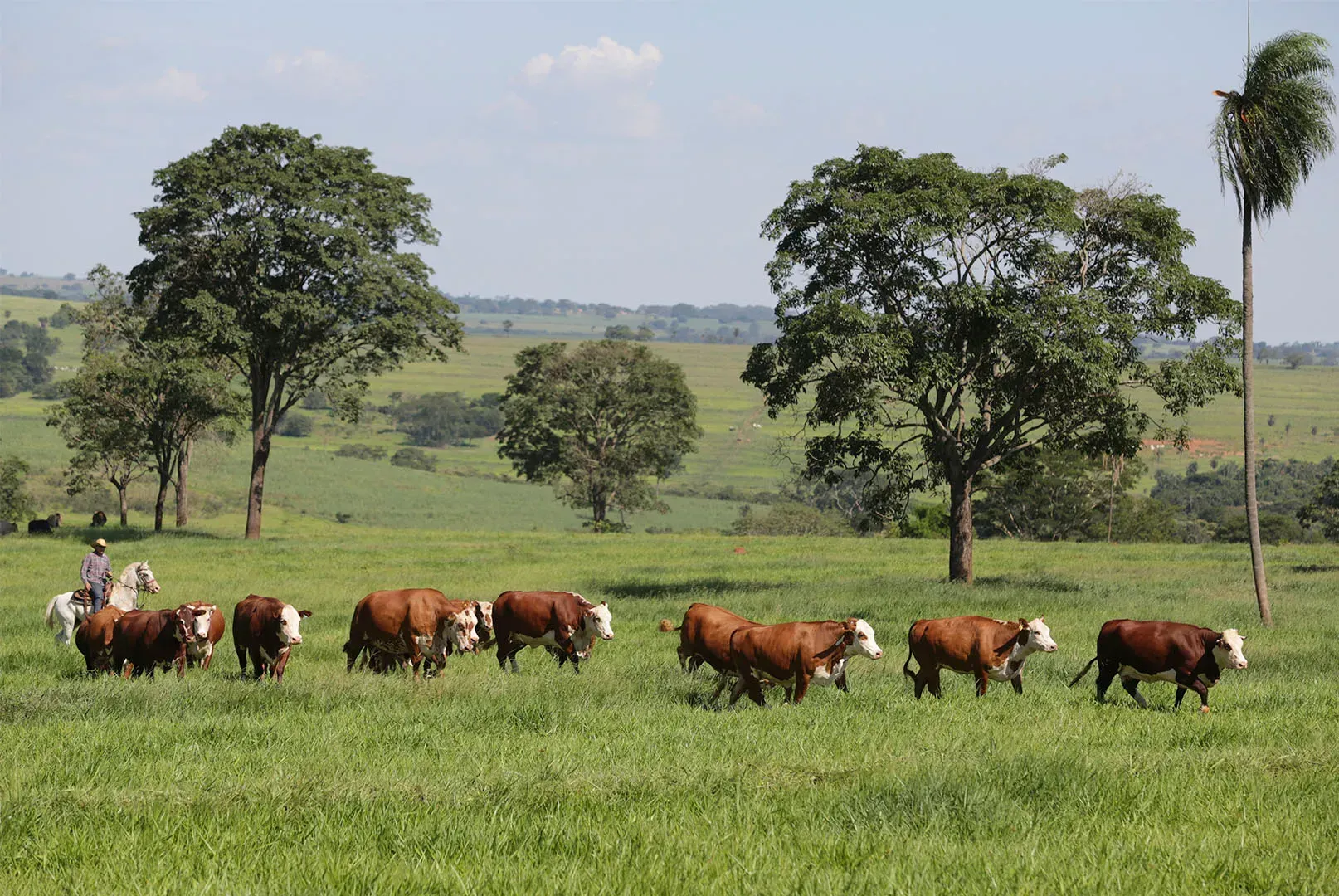
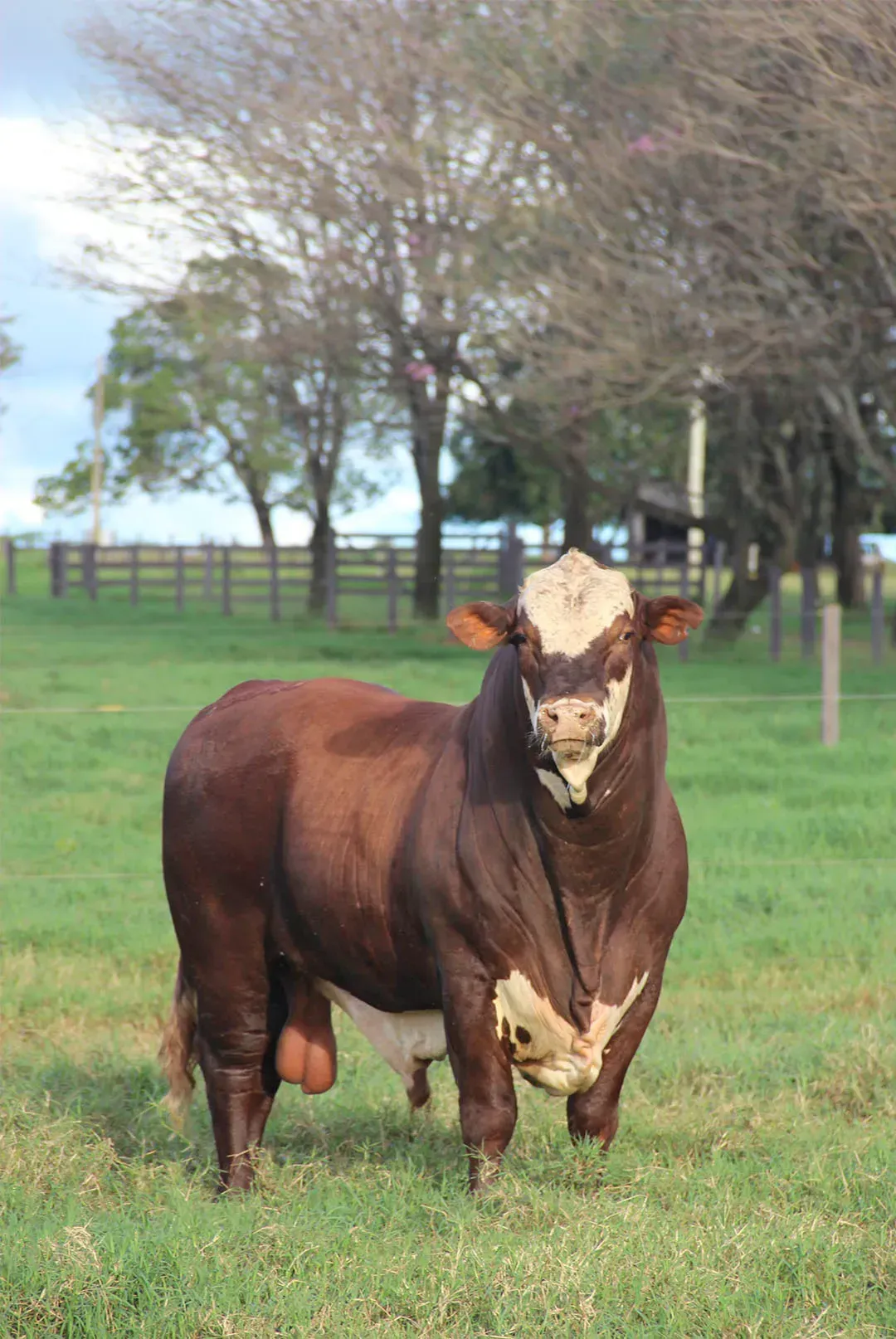
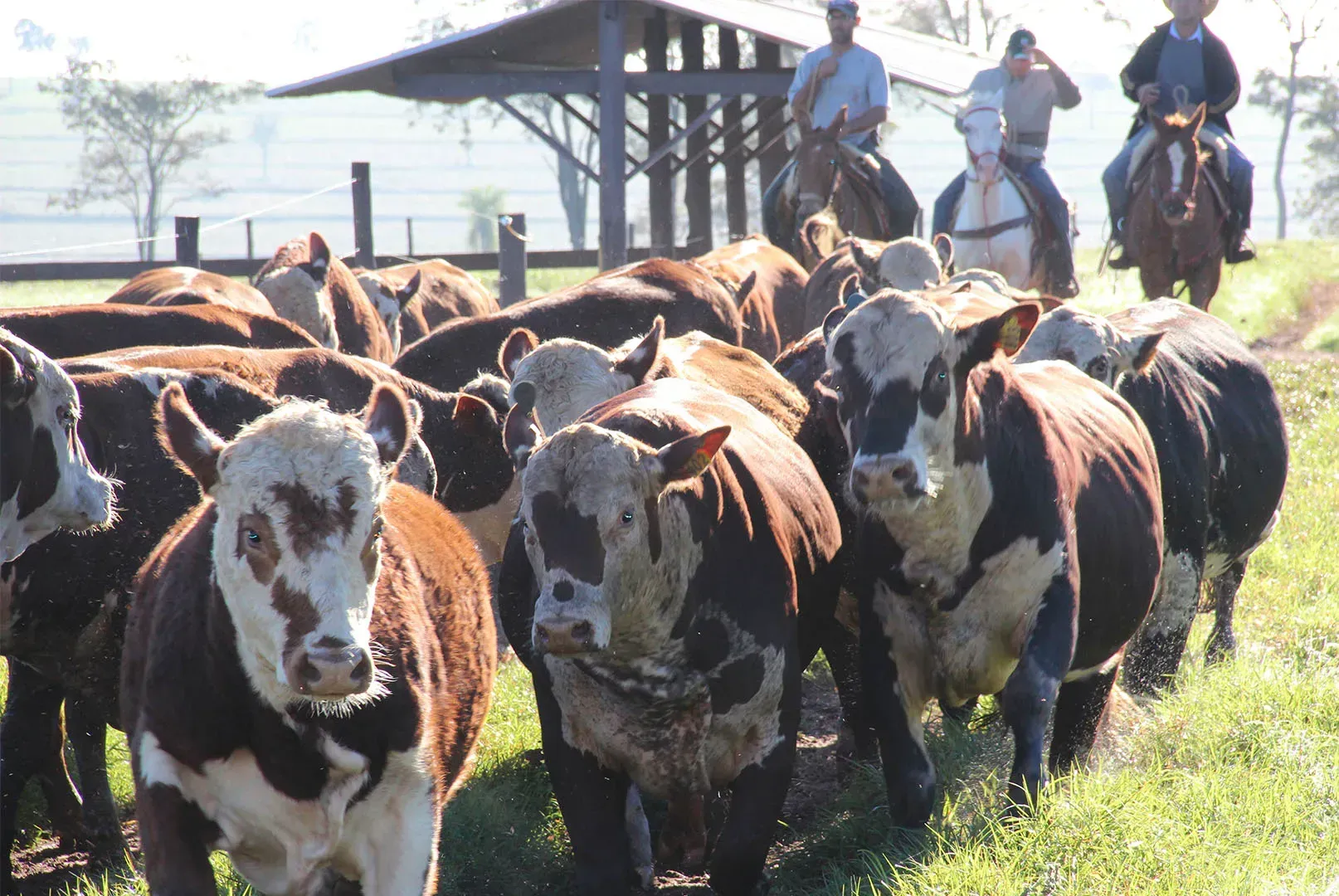
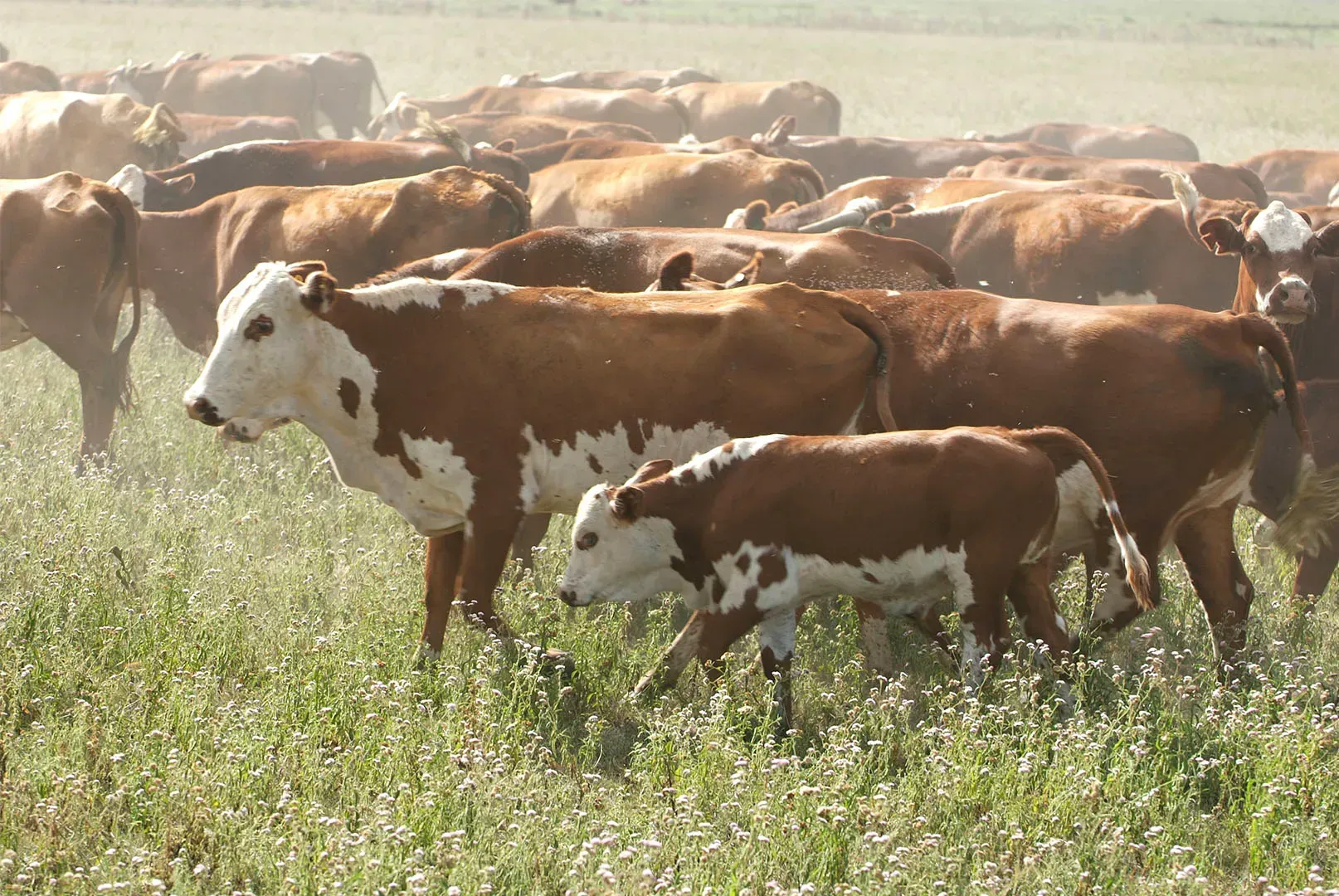
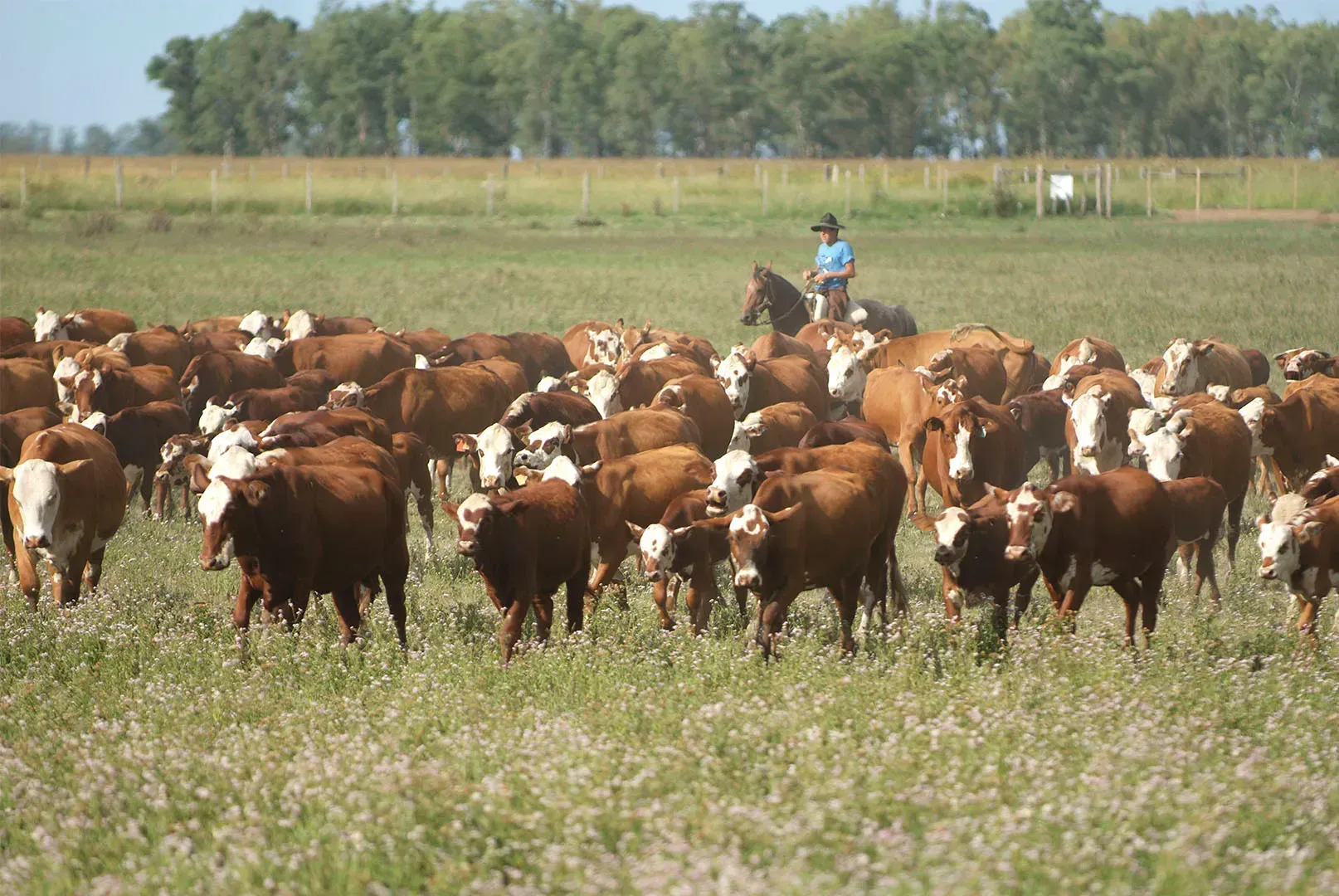
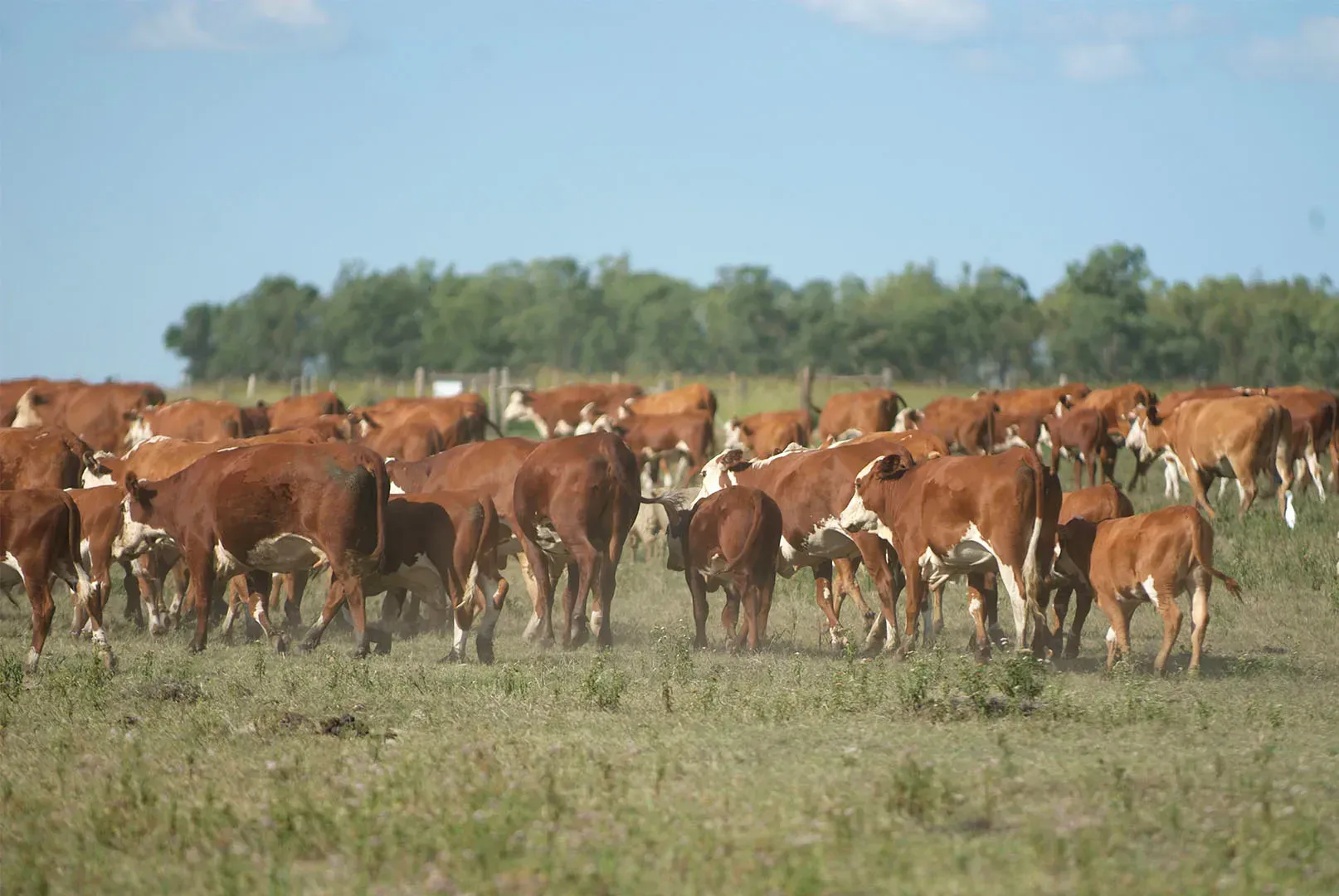
The Braford is red like a Hereford, with a white belly, head, and feet. It is more robust than a Hereford.
Due to the Brahman genetics, the Braford breed is primarily used for beef production, but is sometimes used for rodeo in the United States.
Brafords are known for their high maternal ability. Their early sexual maturity, fertility, and ease of calving...
Ideal milk production, maternal aptitude, and productive longevity have given the Braford breed its distinct reputation.
The cattle are approximately 3/8 Brahman and 5/8 Hereford.
Brafords also have resistance to heat and insects due to a chemical in their blood, which is natural. They perform better in warm climates.
Advantages
Braford cattle have always been recognized for their superior maternal ability. Early puberty, fertility, ease of calving, ideal milk production, maternal fitness, and productive longevity are attributes that have given Braford females this distinct reputation. The use of Braford bulls on purebred or adapted crossbred cows allows ranchers to produce excellent replacement females with the Braford maternal edge.
Braford bulls are not terminal bulls. Braford breeders have taken care to increase the growth rate in their cattle, avoiding large associated increases in adult size that can reduce the ability of Braford bulls and females to function under day-to-day conditions. By avoiding the "bigger is better" syndrome that has plagued the purebred cattle business for years, Braford breeders also avoid problems associated with difficult calvings and market steers that are too large to meet industry needs when finished.