Guzerá
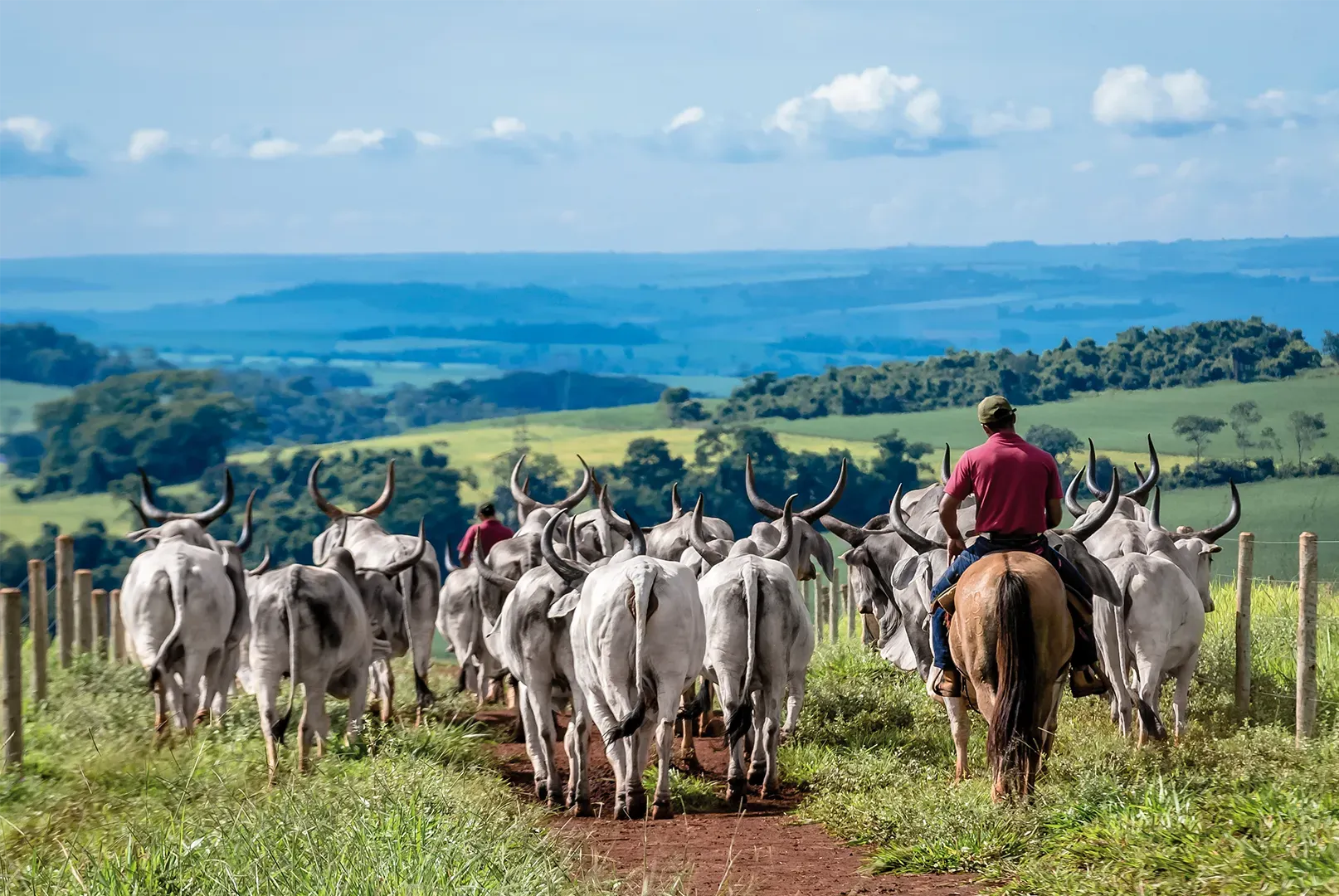
Rusticity, elegance, and grandeur for dairy production.
Origin
The Kankrej, as the Guzerá breed is called in India, originates from the regions of Ahmedabad, Baroda, and Narid in the state of Gujarat, extending also to the southern territory of Rajasthan and southern Madras.
The largest and best-maintained herds are located on the banks of the Sarawati River, north of Kathiawar. The Guzerá breed is very old, so much so that it is represented on the seal found in the ruins of Mohenjo-Daro (cities destroyed about 5,000 years ago) and in figures from the Mesopotamian people.
Features
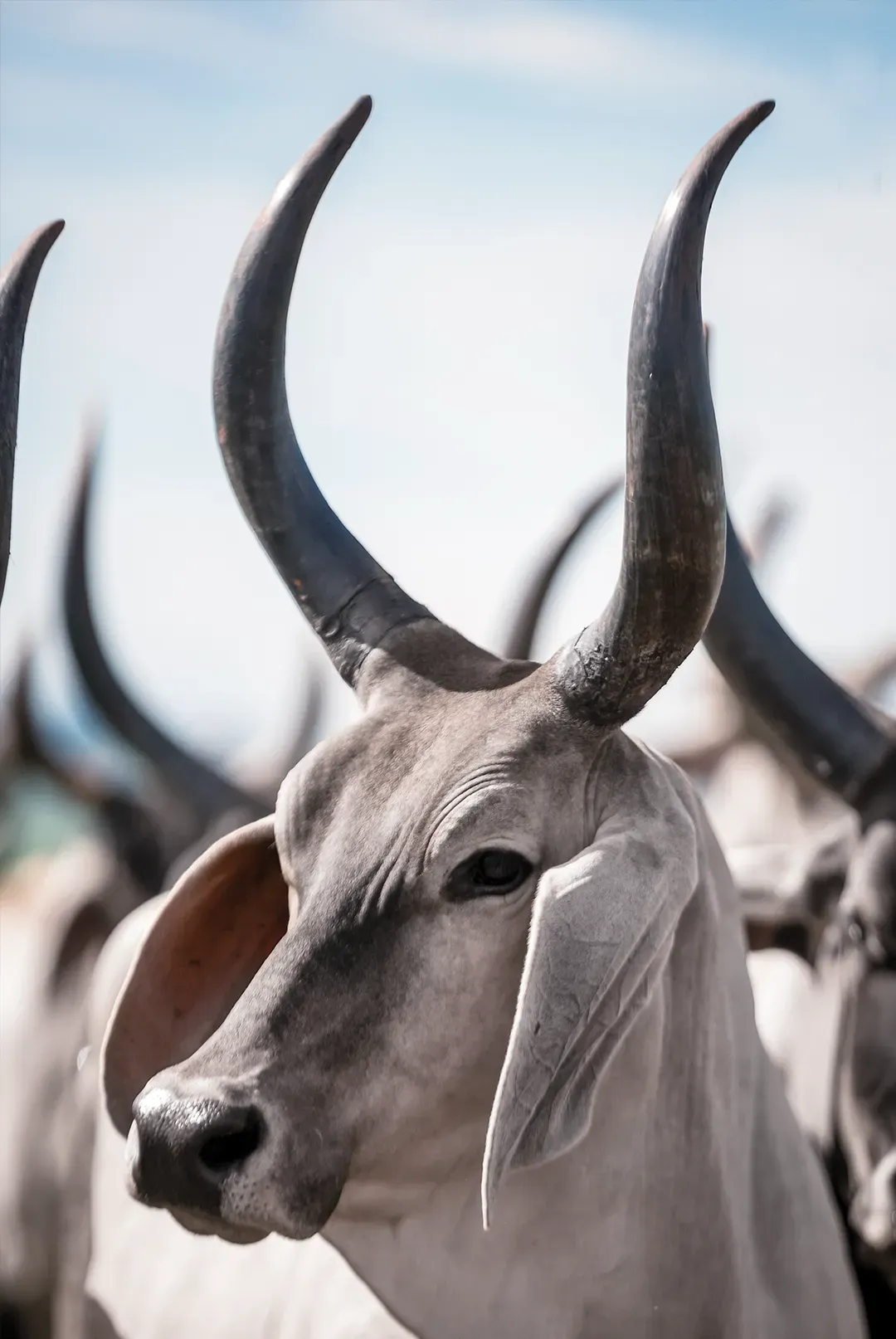
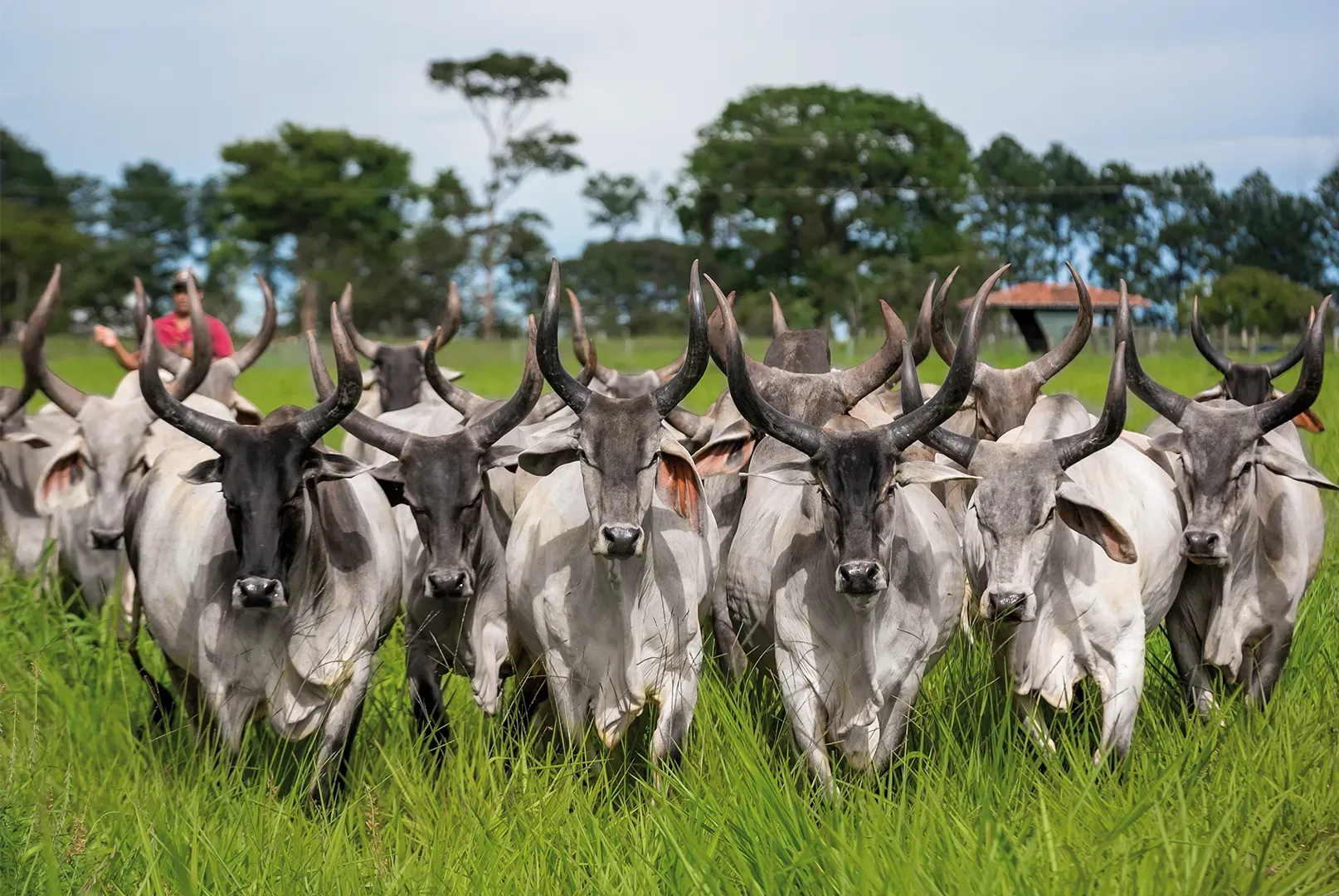
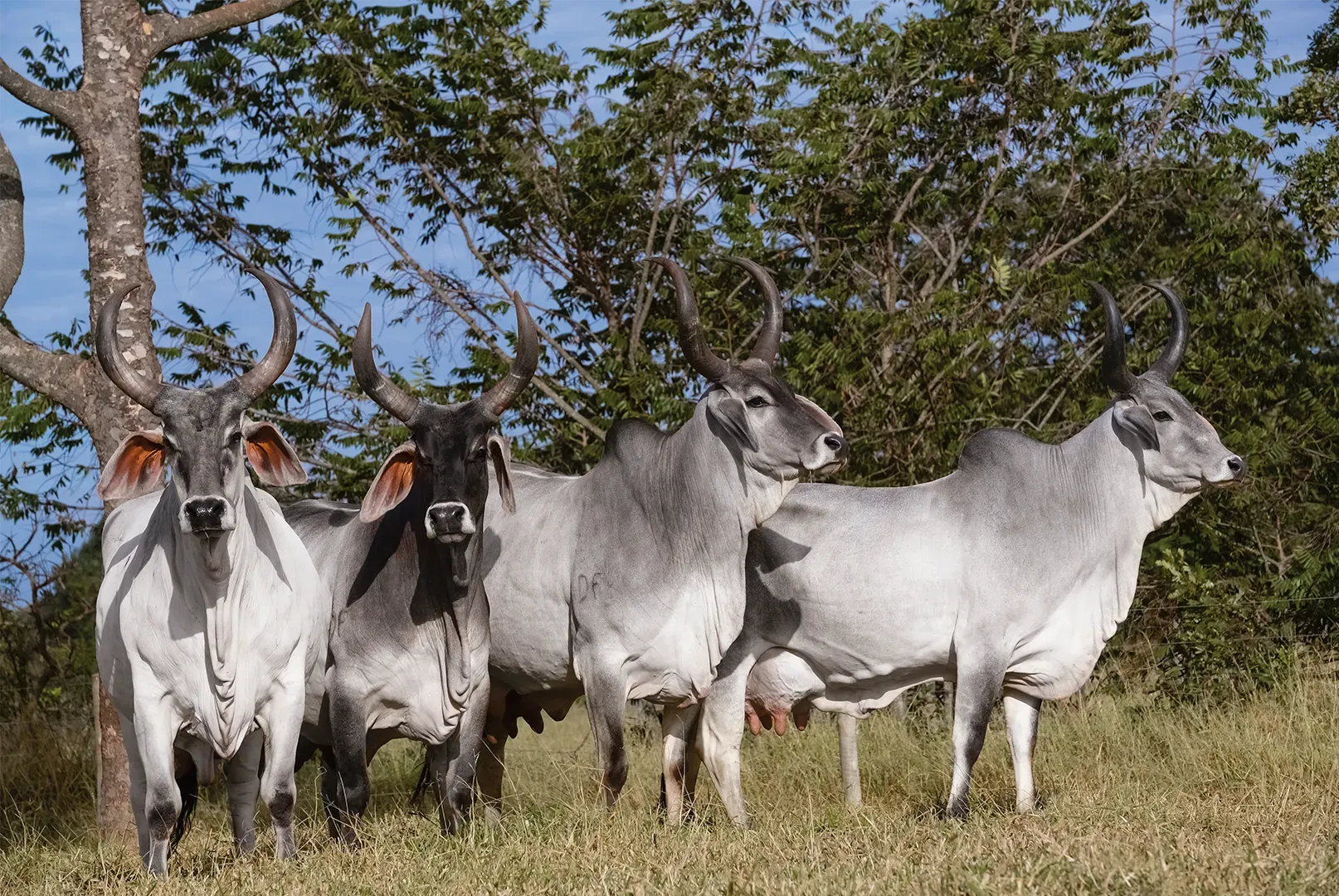
The breed is characterized by its small head and slightly concave profile. In the middle of the forehead, there is a shallow depression known as a "plate," and the horns are medium-sized and lyre-shaped, a very peculiar characteristic.
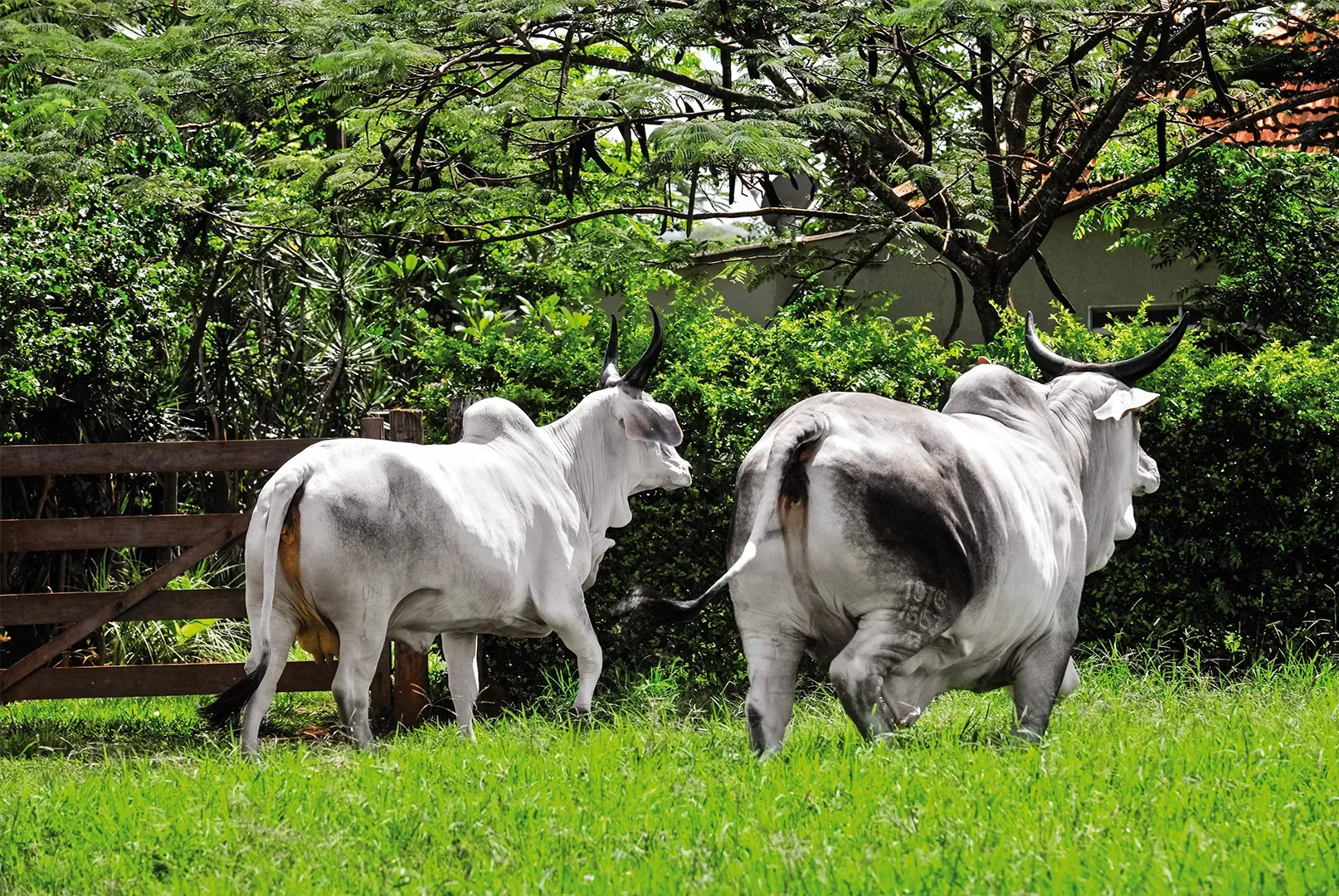
The ideal coat color ranges from white to dark gray, also known as "azulego" cattle (dark extremities and a lighter center).
The typical ears are flat and obliquely positioned, and may have an additional appendage, similar to an "earring". The animals are elegant and imposing, possessing highly pigmented skin, which is a great advantage for the tropical world. Dehorning has been permitted in this breed since 1998.
Advantages
Highly valued in northeastern Brazil due to its high hardiness, interest in this breed has been growing throughout Brazil, making it an excellent option for crossbreeding with "white cows" or a third breed in a potential "three-way cross."
The females exhibit high fertility and excellent maternal ability, and the calves are very resistant to common diseases during the first period of life.
The males are large, heavy, with muscular builds and a steep growth curve in the first years of life. Females can reach 600 kg at 48 months, and males can reach 900 kg at 48 months.
The average milk production of the Guzerá breed is 2,422 kg, with a fat content of 4%, over an average lactation period of 272 days. For first-calf heifers, the average production found was 2,241 kg, over an average lactation period of 279 days.