Origin
The Sindi breed originates from the region called Kohistan, in the northern part of the Sindh province, in present-day Pakistan. The Las Bela variety, perhaps the purest lineage of the breed, is found in the state of the same name, in Balochistan. A certain variety of types can be observed outside its area of origin, and for this reason, when it comes to choosing purebred breeding stock, there is a tendency to look for them in Las Bela.
In Brazil: It is believed that the breeding bull received in Bahia in 1850 by the Viscount of Paraguaçu was probably a Sindi; lacking females of the same type to guarantee the perpetuation of the breed, it is evident that its blood was diluted in the Creole cattle. Shortly afterwards, probably between 1854 and 1856, according to the letter that Joaquim Carlos Travassos addressed in 1906 to the Jornal dos Agricultores (Farmers' Journal), pairs of the Sindi variety entered the Serra Abaixo (Downtown), an expression then used to designate the Baixada Fluminense (lowlands of Rio de Janeiro). The illustrious zootechnician described them at the time as small animals, not exceeding 1.30 meters at the hump, but robust, especially the cows, "producers of excellent and abundant milk".
Teófilo de Godoy, in 1903, became acquainted with and appreciated this breed, so much so that three years later he was willing to import it, along with Nelore, Guzerá, and Hissar, as advertised during his trip. Among the animals imported by Francisco Ravísio Lemos and Manoel de Oliveira Prata in 1930, more than one Sindi bull and several females were identified.
The 1952 Import: The importation of Sindi cattle directly from Pakistan in 1952 could be considered a true cinematic story. The author of this feat was the director of the Northern Agronomic Institute (IAN), Felisberto de Camargo, who brought with him, in a chartered English cargo plane, 31 animals of the breed, including 28 females and three breeding bulls.
Features
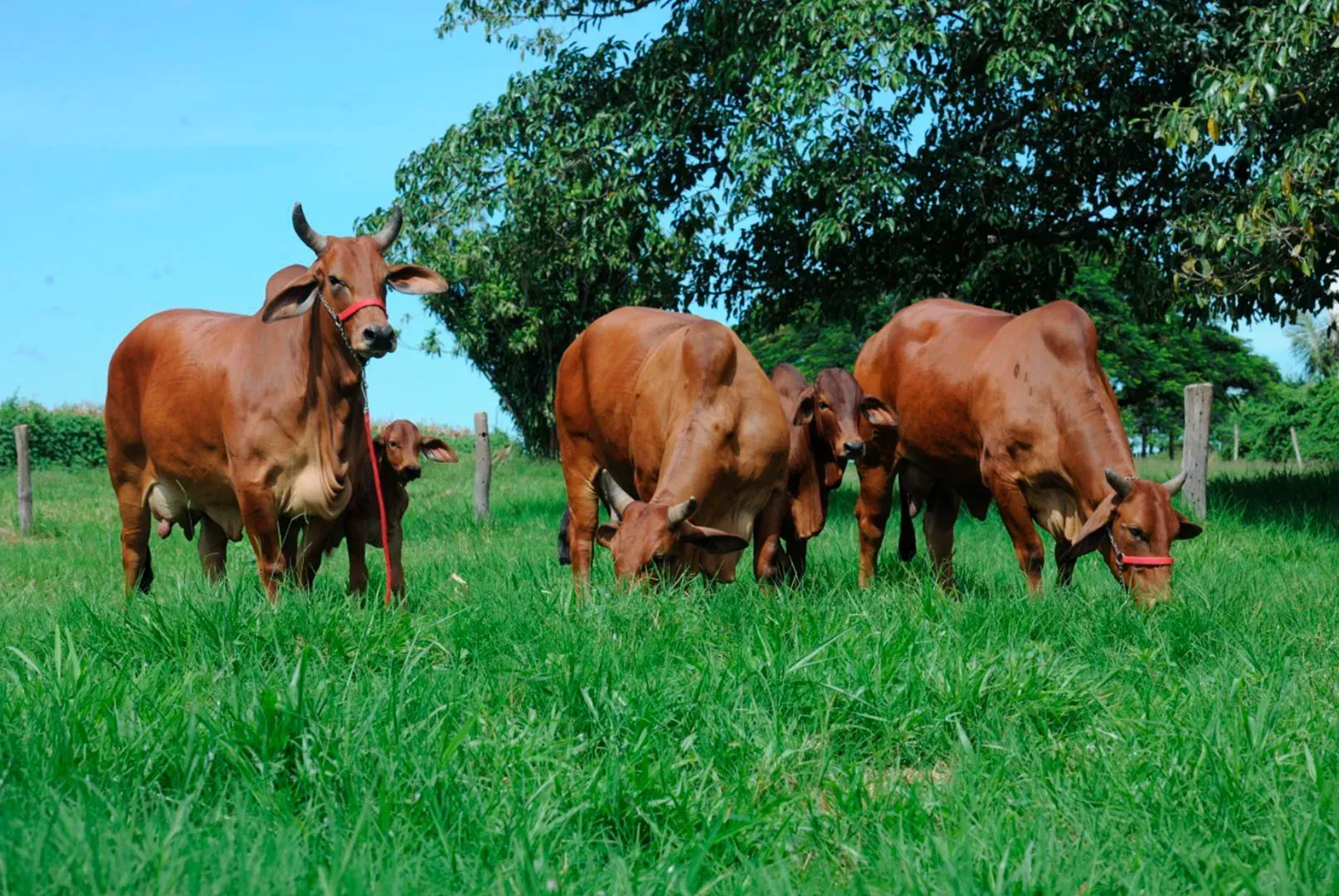
Sindi cattle are medium-sized, handsome, and suitable for regions with limited food resources, where maintaining large animals would be difficult. They have been selected for dual-purpose purposes, with lines that are extremely productive in milk production and also demonstrate excellent performance in technical slaughtering.
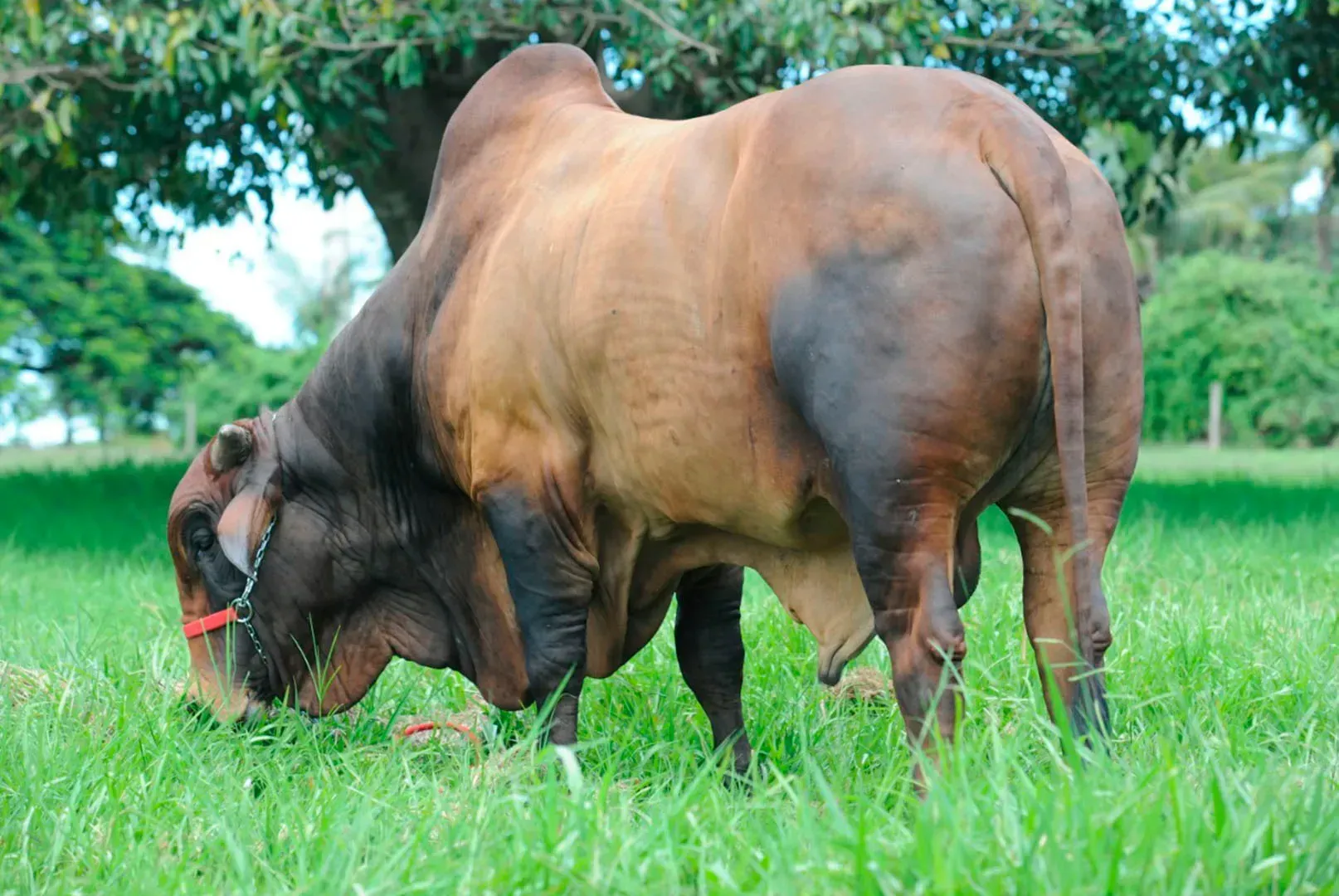
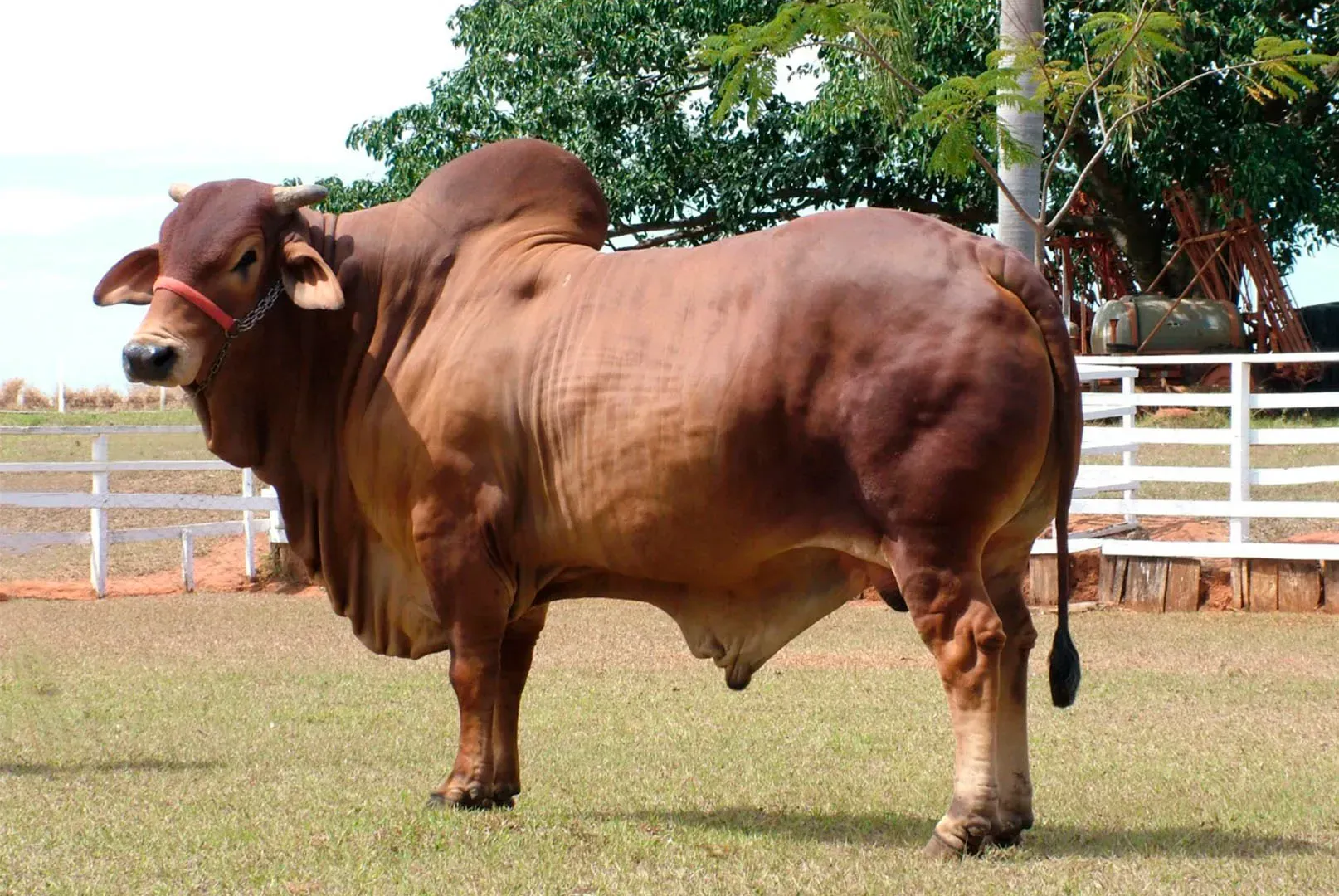
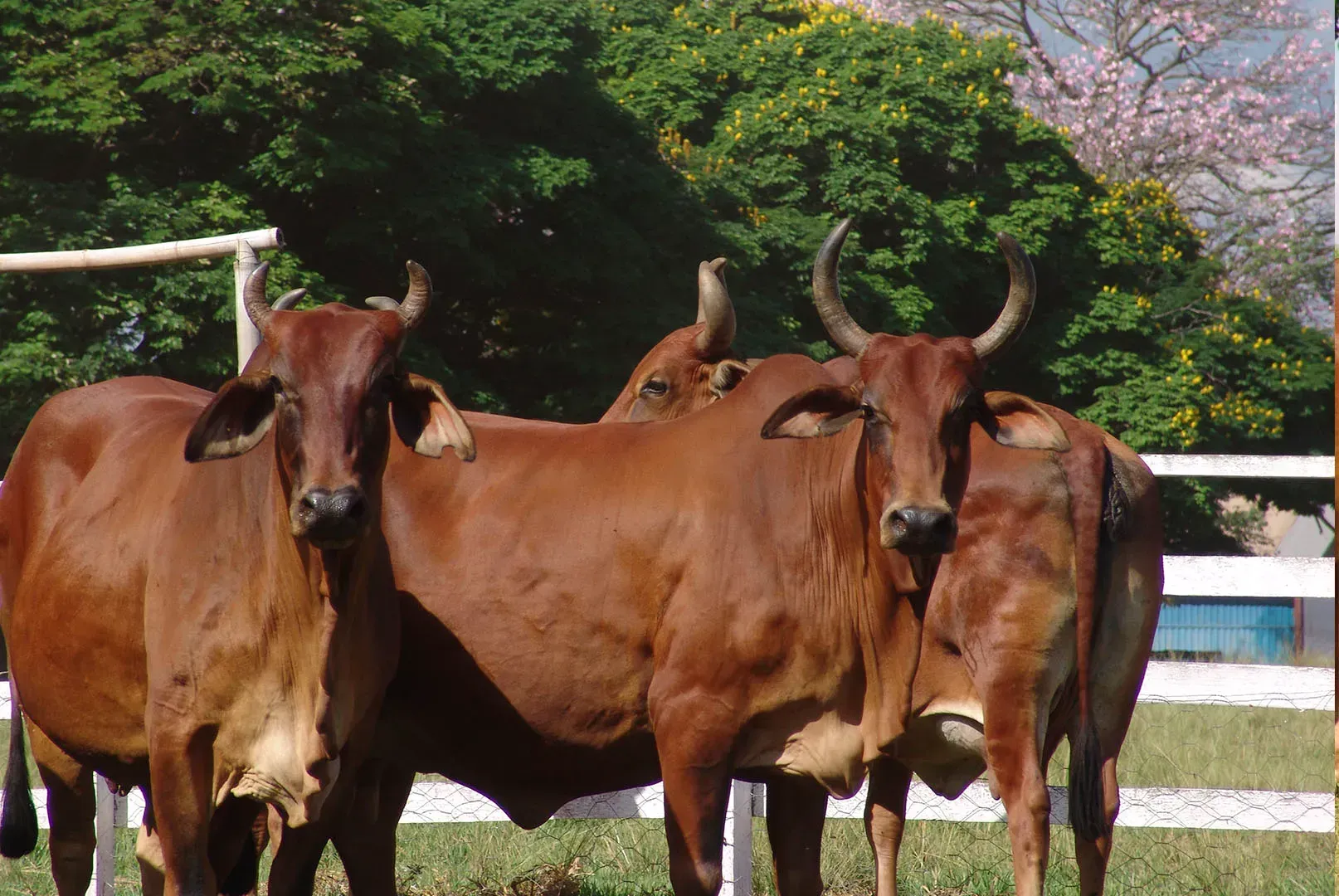
The head is small and well-proportioned, with a convex profile. The horns are thick at the base, growing sideways and curving upwards. The ears are medium-sized and drooping, measuring 25 to 30 cm in length and 15 cm in width; they adapt easily to different climate and soil conditions. They are compact, with rounded hindquarters.
The neck is short and strong, more delicate in females; the dewlap is of medium size, more developed in males. The hump is medium to small in females and relatively large in males, appearing firm and well-placed on the withers.
The Sindi Mocho breed began to be registered by ABCZ starting in 2002.
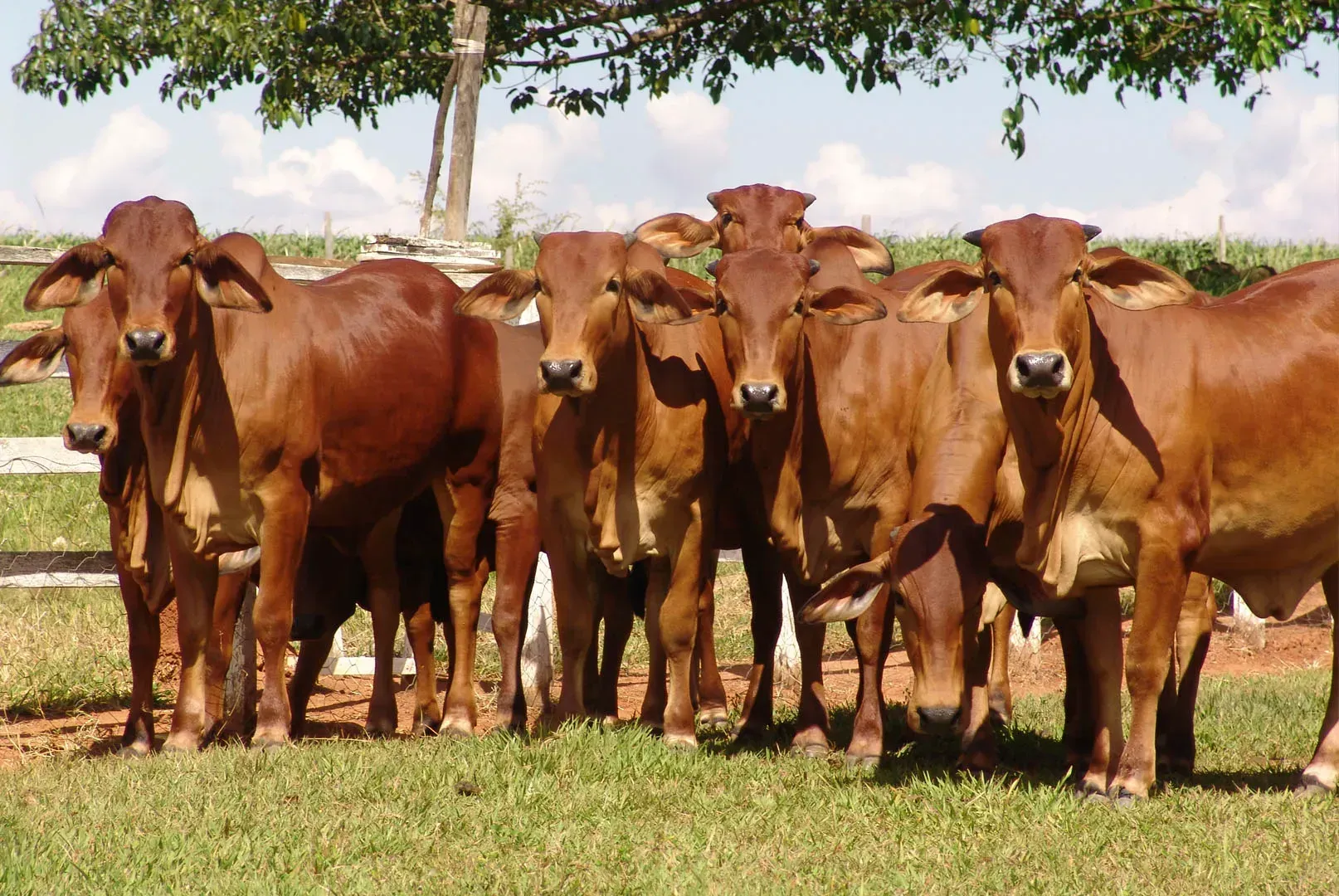
The coat is red, varying from dark to yellowish-orange; white spots are sometimes observed on the dewlap, forehead, and belly, but there are no large patches. Bulls have darker shoulders and thighs. Around the muzzle, udder, perineum, and pasterns, the coat has lighter shades. In this breed, white is recessive, appearing occasionally even in purebred herds, but it is not appreciated. The skin, slightly loose, is covered with fine, soft, and shiny hair; the pigmentation of the skin and mucous membranes is dark. The hooves are strong, compact, and dark in color. The tail is thin, long, ending in an abundant tuft, dark or black in color.
The trunk is deep, compact, yet long and tending towards cylindrical; the dorsal-lumbar line is straight and almost horizontal; the back and loin are well-muscled, the rump is rounded but sloping. The udder is voluminous, tending to become pendulous; teats are often thick.
The limbs are short, thin, with delicate bone structure, well-formed and correctly aligned; the joints are not very large.
Advantages
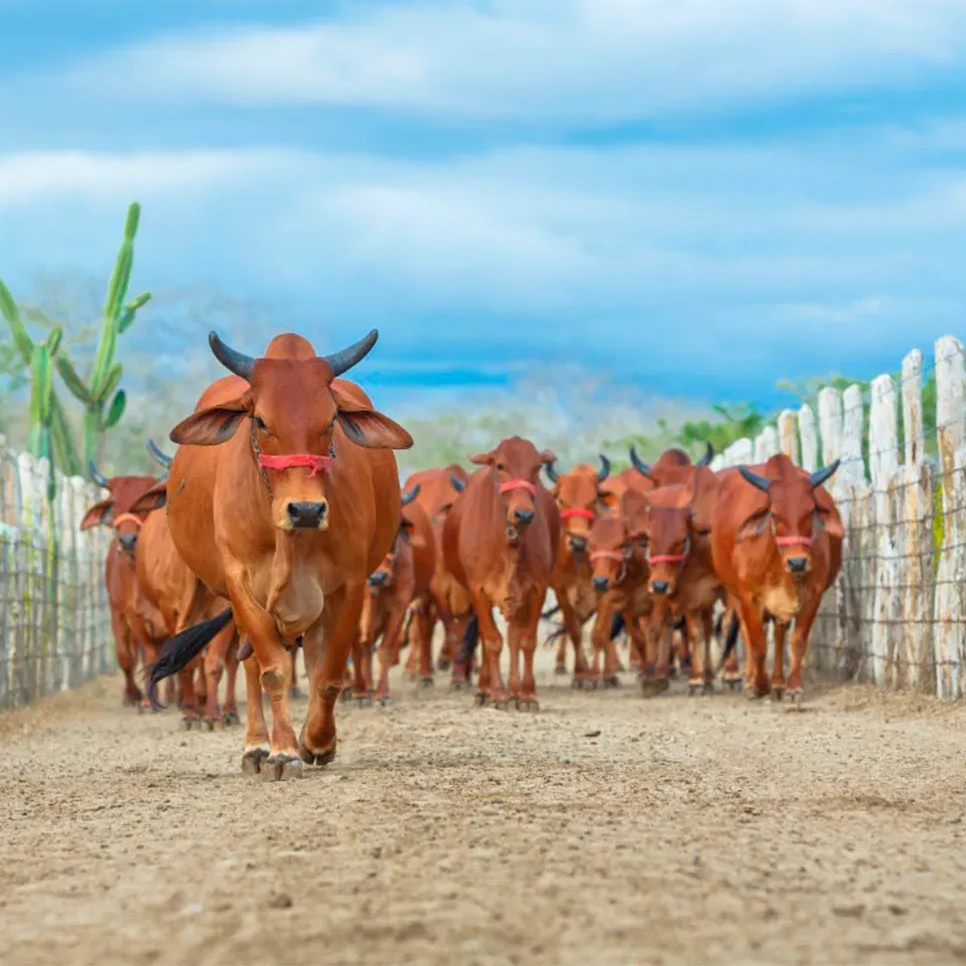
Its ability to walk in search of water and food, as its small, strong hoof allows it to move easily, and its red coat is much more suitable for the hot, semi-arid climate.
Good meat and milk production even in semi-arid environments or extreme conditions.
Because it is a docile animal, it is easy to manage the herd between areas or paddocks; and because of its small size, Sindi cattle reach slaughter age, with ideal finishing, earlier than larger animals. The potential of Sindi cattle becomes even more significant when crossbred with other breeds, generating half-blood animals. The Sindi and Nelore crossbreed has been the most widely used option for meat production on farms that invest in genetic improvement.
Despite conditions of low availability of pasture and other forage, lack of water, and low capital availability, Sindi cattle can still provide financial benefits. Their metabolic ability to survive high temperatures under precarious climatic conditions, their capacity to utilize poor nutritional resources, along with their medium size and lower feed requirements, and their ability to travel long distances with small, hard hooves, allows them to make better use of the available land.