EXPENSIVE
Productive longevity and high fertility levels
Origin
The Brangus breed was developed to utilize the superior characteristics of the Angus and Brahman breeds.
Its genetics are stabilized at 3/8 Brahman and 5/8 Angus.
The combination results in a breed that unites the characteristics of two highly successful "parent breeds".
The Brahman breed, through rigorous natural selection, has developed disease resistance, hardiness, and a remarkable maternal instinct. Angus cattle are known for their superior carcass qualities. They are also extremely functional females that excel in both fertility and maternal ability.
A review of the Brangus breed's development would take us back beyond the founding of the American Brangus Breeders Association in 1949; however, registered Brangus descend from the foundation animals registered that year. Much of the early work on crossing Brahman and Angus cattle was done at the USDA Experimental Station in Jeanerette, Louisiana. According to the USDA 1935 Yearbook in Agriculture, research on these crosses began around 1932.
During the same period, Clear Creek Ranch of Welch, Oklahoma and Granada, Mississippi, Raymond Pope of Vinita, Oklahoma, Essar Ranch of San Antonio, Texas, and some individual breeders in other parts of the United States and Canada, were also carrying on private experimental breeding programs. They were searching for a desirable beef-type animal that retained the Brahman's natural ability to thrive under adverse conditions combined with the excellent qualities for which Angus is known.
The first breeders from 16 states and Canada met in Vinita, Oklahoma, on July 2, 1949, and organized the American Brangus Breeders Association, later renamed the International Brangus Breeders Association (IBBA), headquartered in Kansas City, Missouri, and eventually San Antonio, Texas, where the permanent headquarters has been located since January 1973. Currently, there are members in almost every U.S. state, Canada, Mexico, Australia, Central America, Argentina, and Southern Rhodesia (in Africa).
In Brazil, crossbreeding began in the 1940s, carried out by technicians from the Ministry of Agriculture, Livestock and Supply (MAPA) in Bagé, Rio Grande do Sul. Initially, the resulting crossbreed was named the Ibagé breed by the technicians of the time. A few years later, because the crossbreeding was the same as that achieved in the United States, the breed's name became Brangus Ibagé, until it was simply Brangus years later.
Features
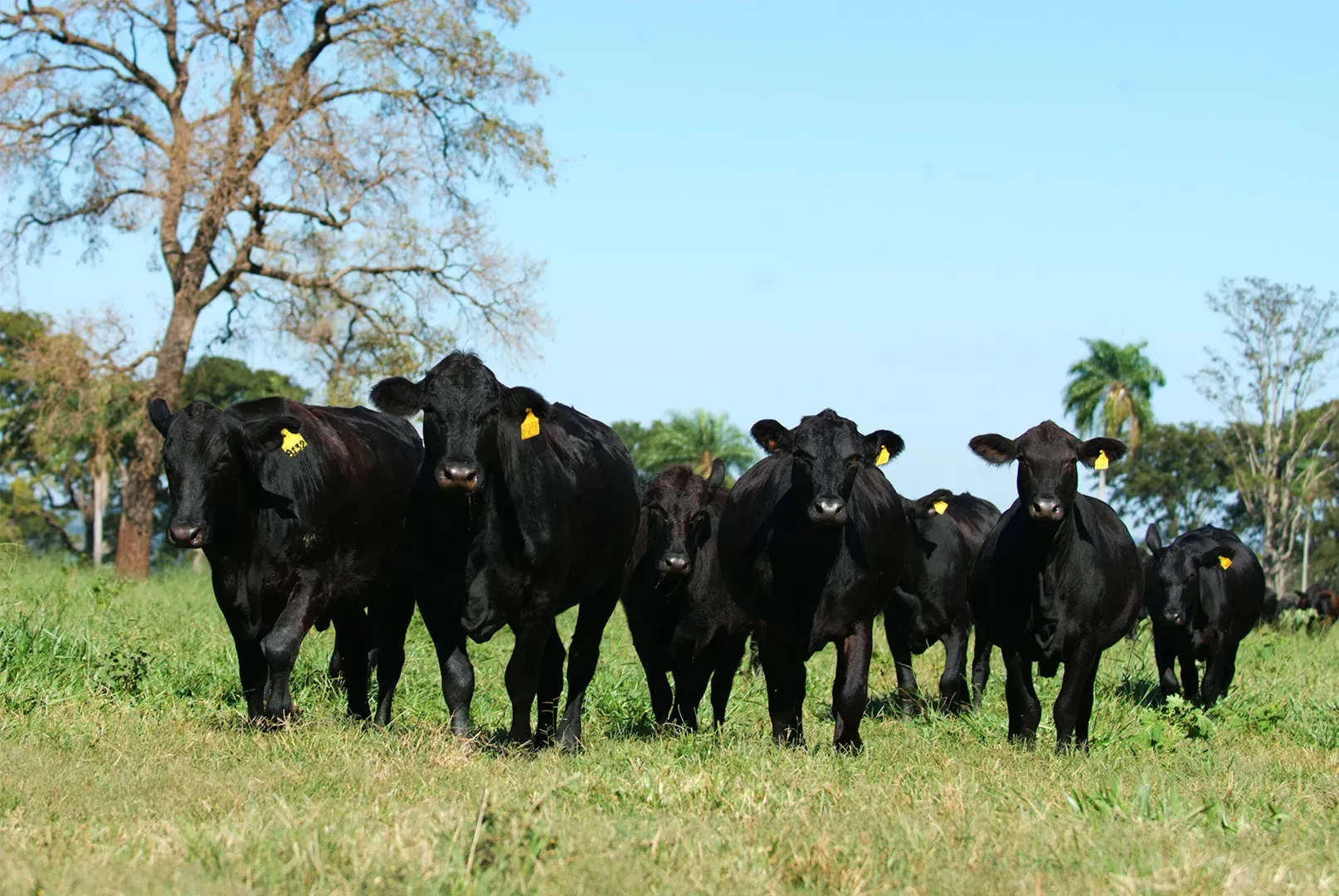
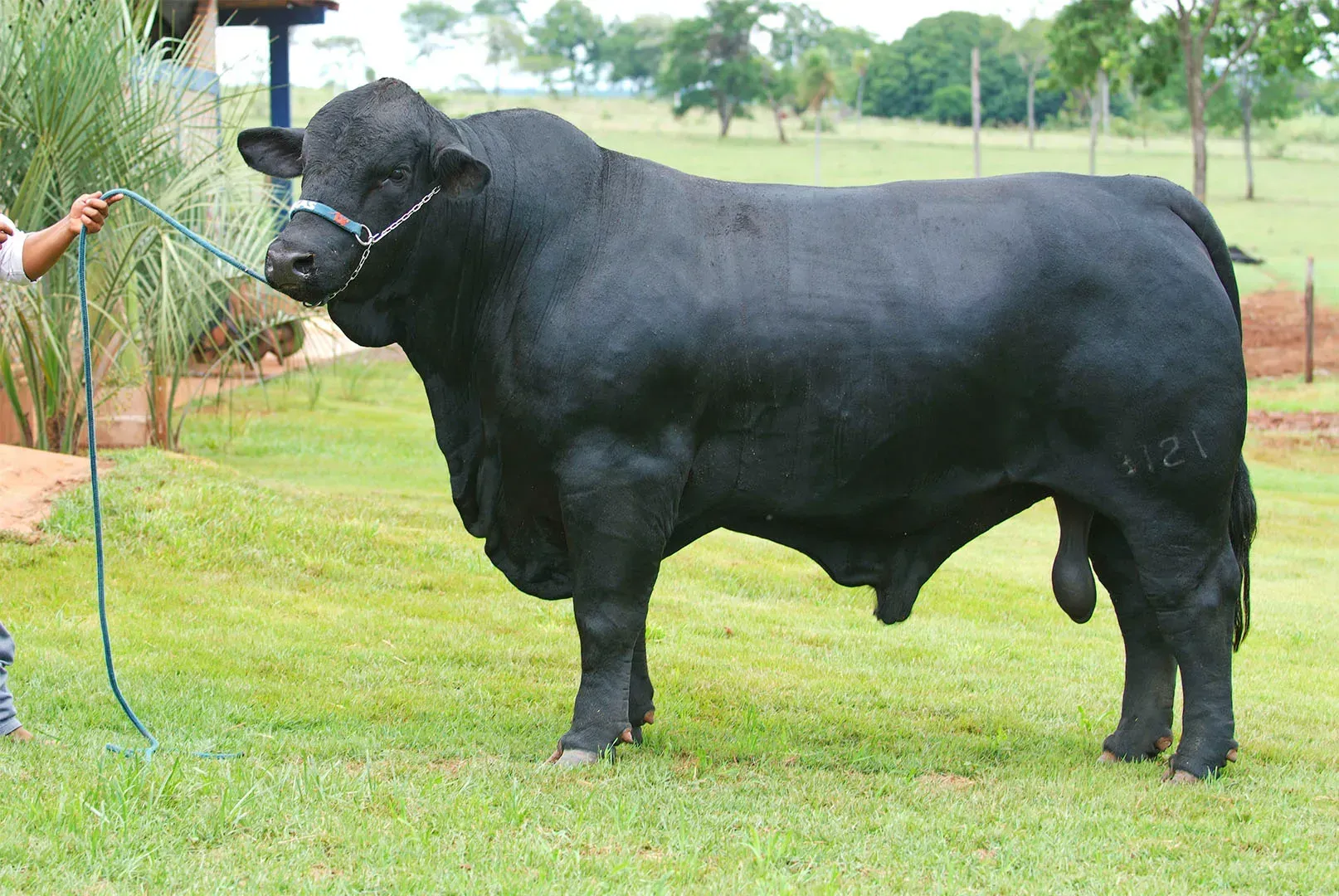
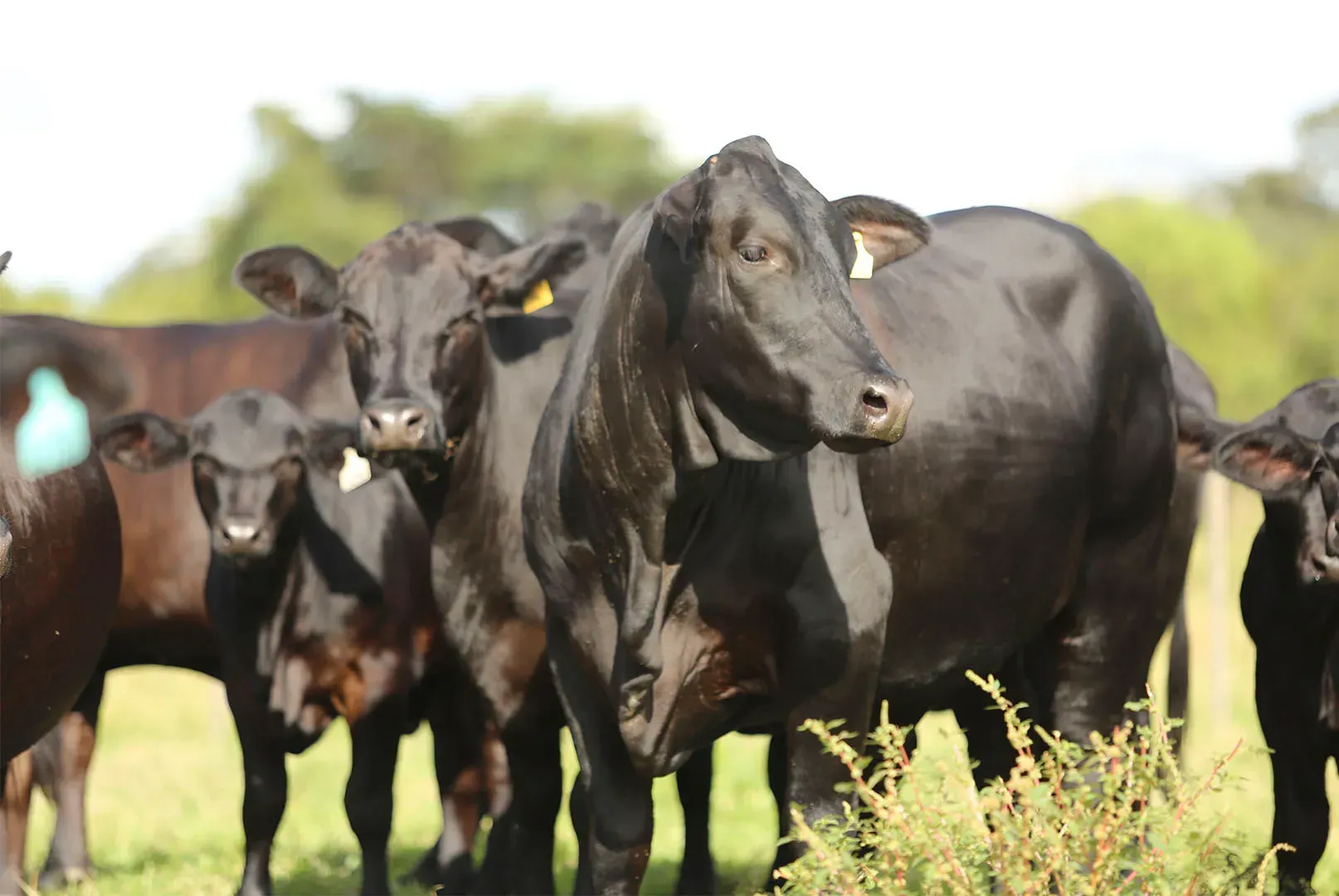
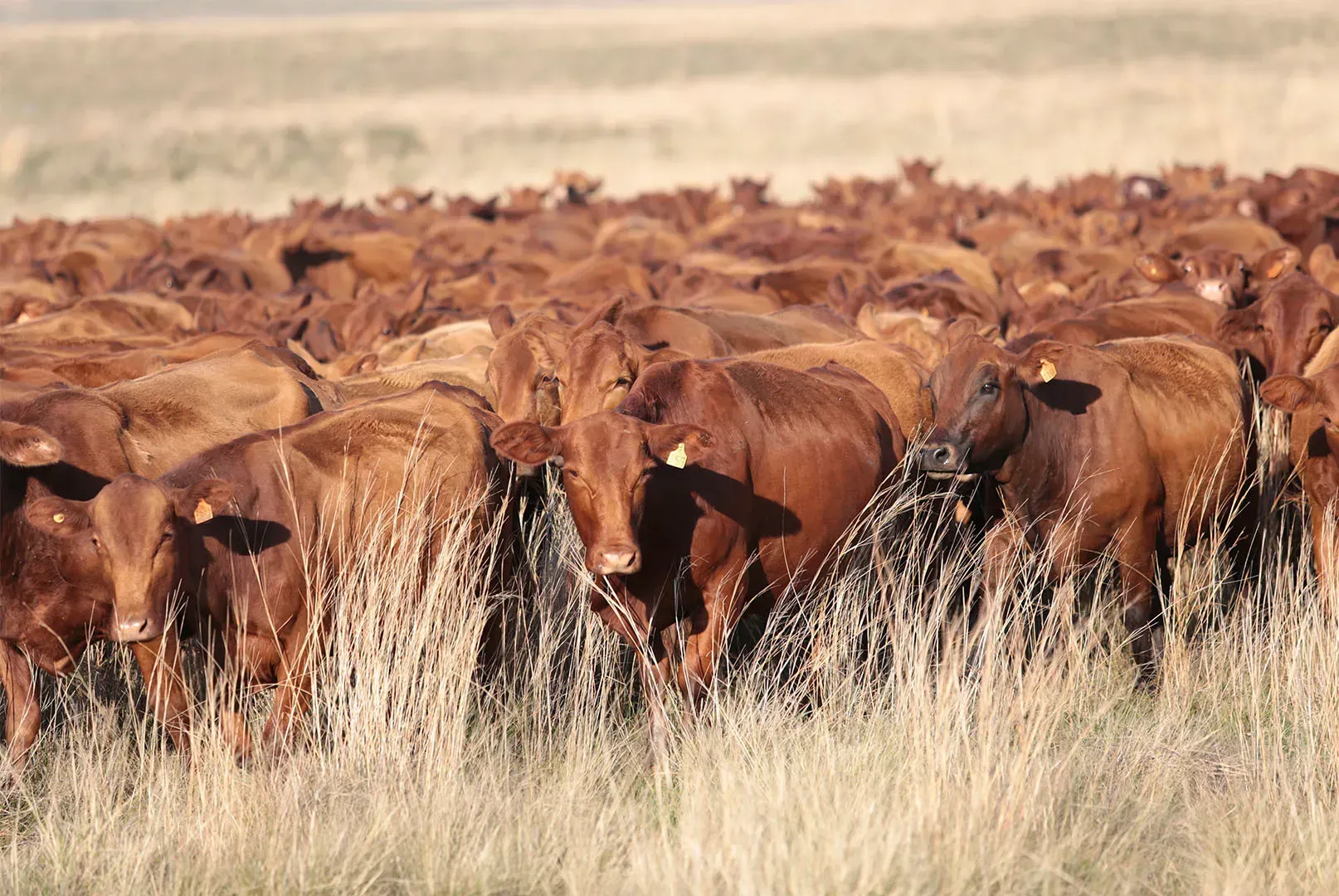
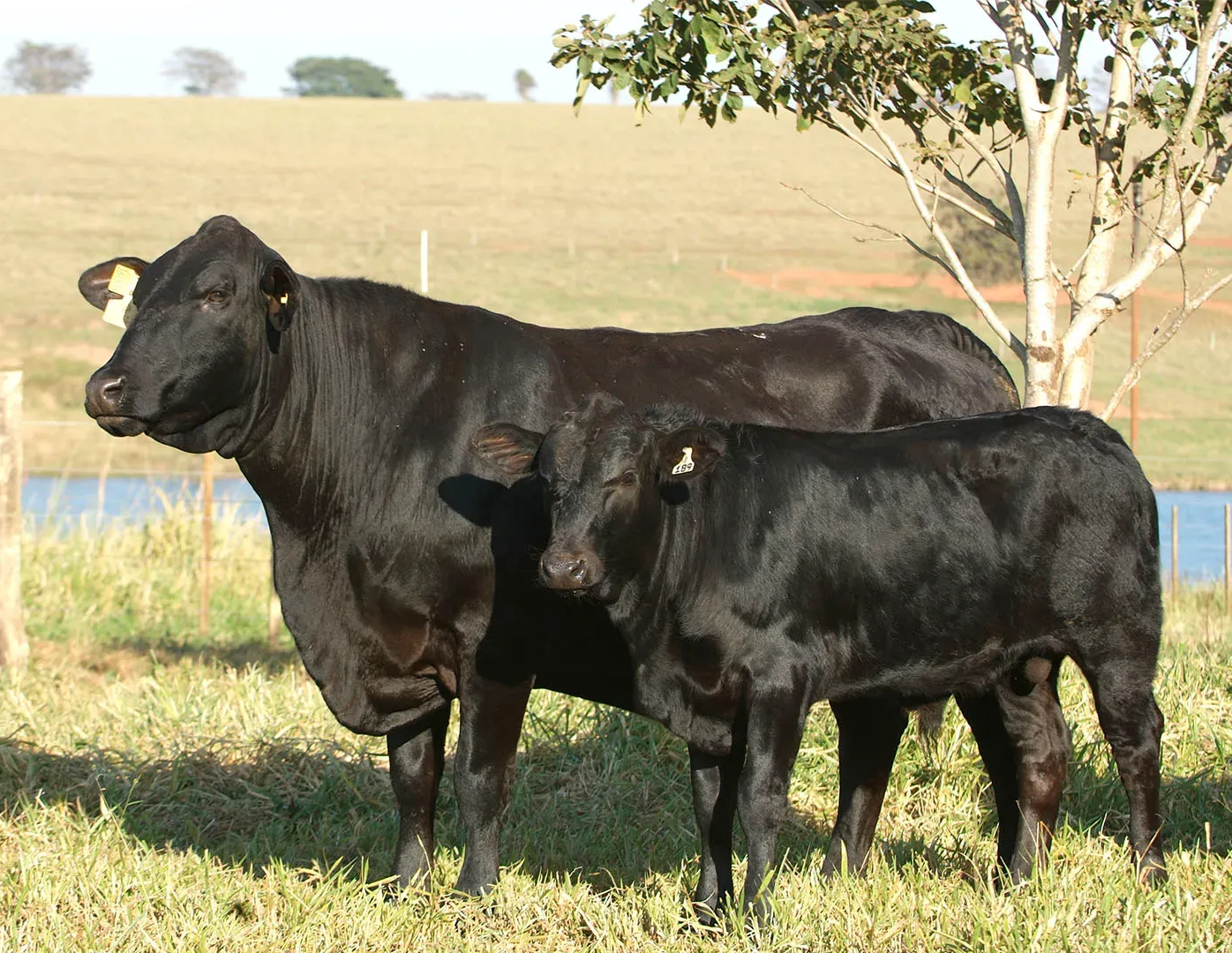
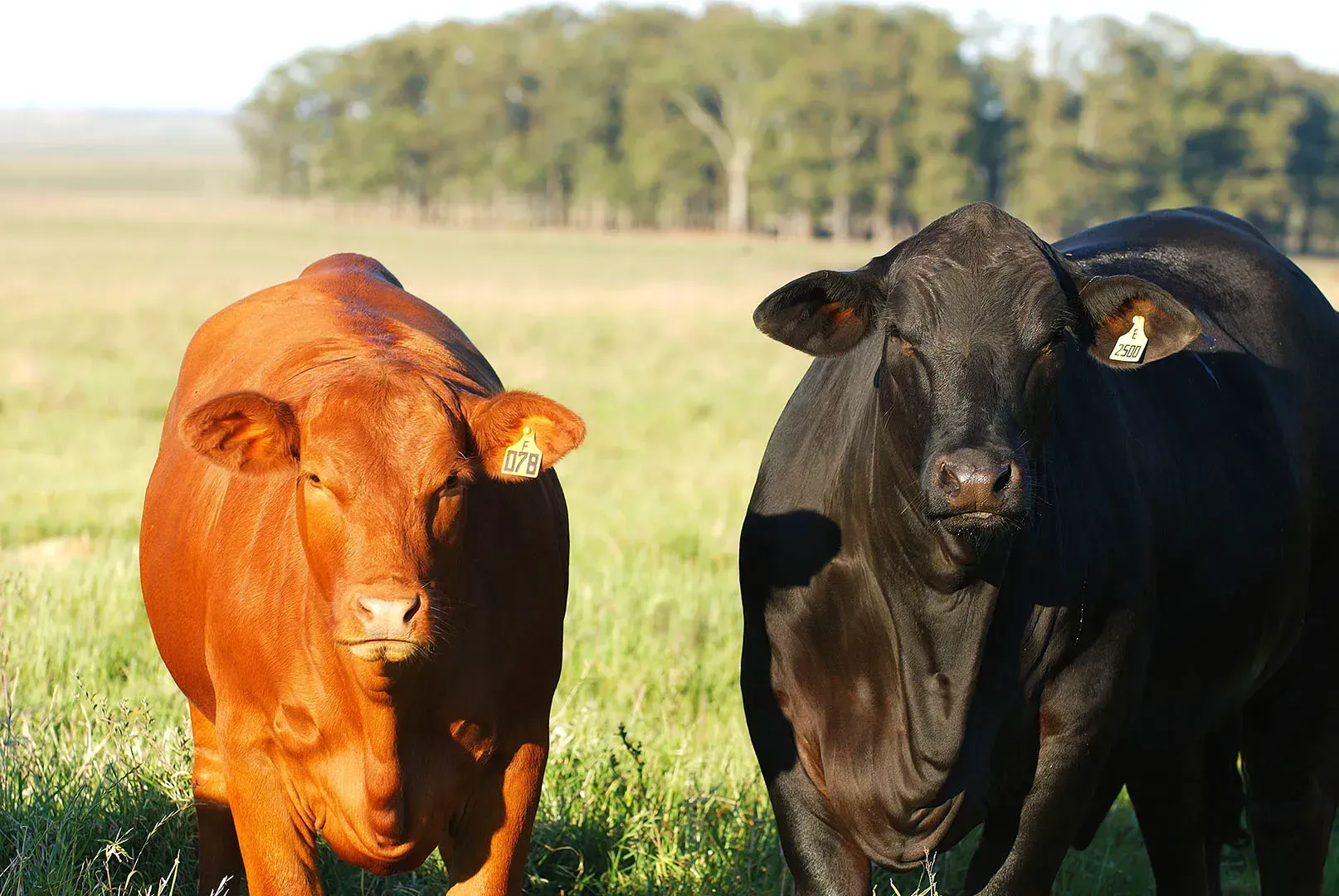
The Brangus breed can be black or red, owl-colored, with fine fur and pigmented skin. Its ears are medium to large, and the skin is loose, with folds on the neck. The rump is slightly rounded, and the bulls have a moderate hump.
Brangus dogs have a good temperament that was originally selected for when the breed was created.
Adult Brangus bulls typically weigh between 800 and 900 kg, while mature females weigh between 500 and 550 kg.
Bulls reach puberty at two years of age and are ready to enter service at 18 months. Heifers are ready to breed at 14 months of age and deliver their first calf at 24 months of age.
Bulls can remain in service until they are 12 years old, while cows can produce calves beyond 14 years of age.
This breed is considered very versatile due to its high performance in pastures and feedlots, with good resistance to heat and high humidity. Under cold climate conditions, they produce enough fur for adequate protection.
The cows are good mothers and the calves are generally of average size at birth.
Advantages
Resistant to heat and high humidity
Resistant to cold climates
Good mothers
Resistance to ticks and bloating
Good production in pastures
Rapid weight gain
Median maturity
A carcass without excess fat