Origin
The idea of forming a national Zebu breed through crossbreeding arose from the imperfections of imported breeds and the desire to combine the best qualities of each into a single breed. It is possible that the first crossbreedings were done out of mere curiosity.
Colonel José Caetano Borges played an important role in the formation of the breed, which he called Induberaba, just as in other regions it was called Induaraxá, Indubahia, Induporã, etc. However, the Rural Society of the Triângulo Mineiro, meeting in 1938 to establish the breed standard, decided to adopt the name Indubrasil for this type of cattle.
There have been some obstacles surrounding the identification of Indubrasil as a breed. In fact, not every crossbred Zebu cattle can be considered as belonging to the Indubrasil breed, even if it shares its characteristics, but rather only those animals that, possessing its characteristics, especially those that are registered, transmit them to their offspring. Initially, Guzerá and Nelore cattle contributed to the formation of the breed, and later Gir. The contribution of Nelore to the current herd is very small, with the Indubrasil showing a fusion of Guzerá and Gir characteristics, with a slight predominance of the attributes of the latter breed.
Features
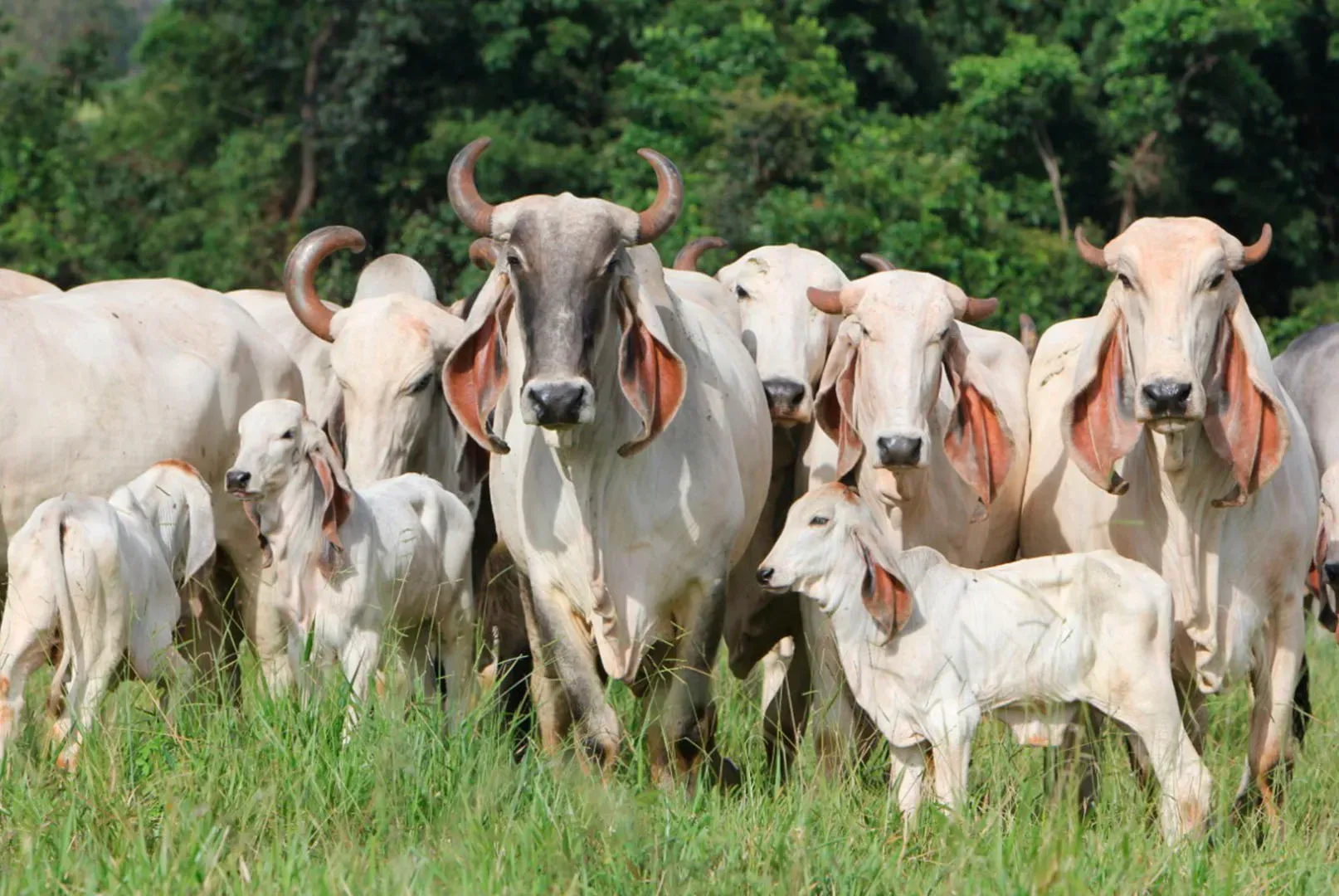
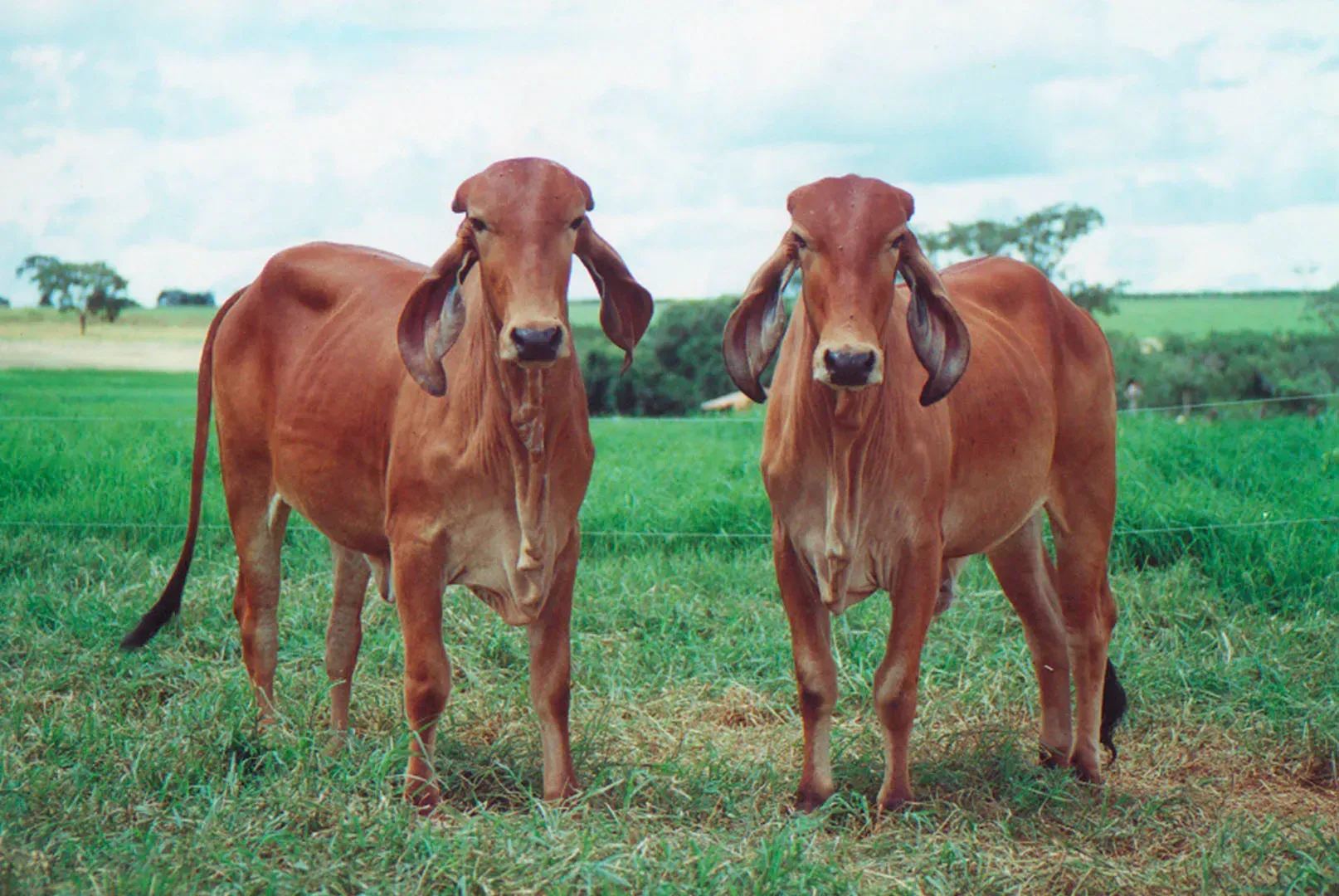
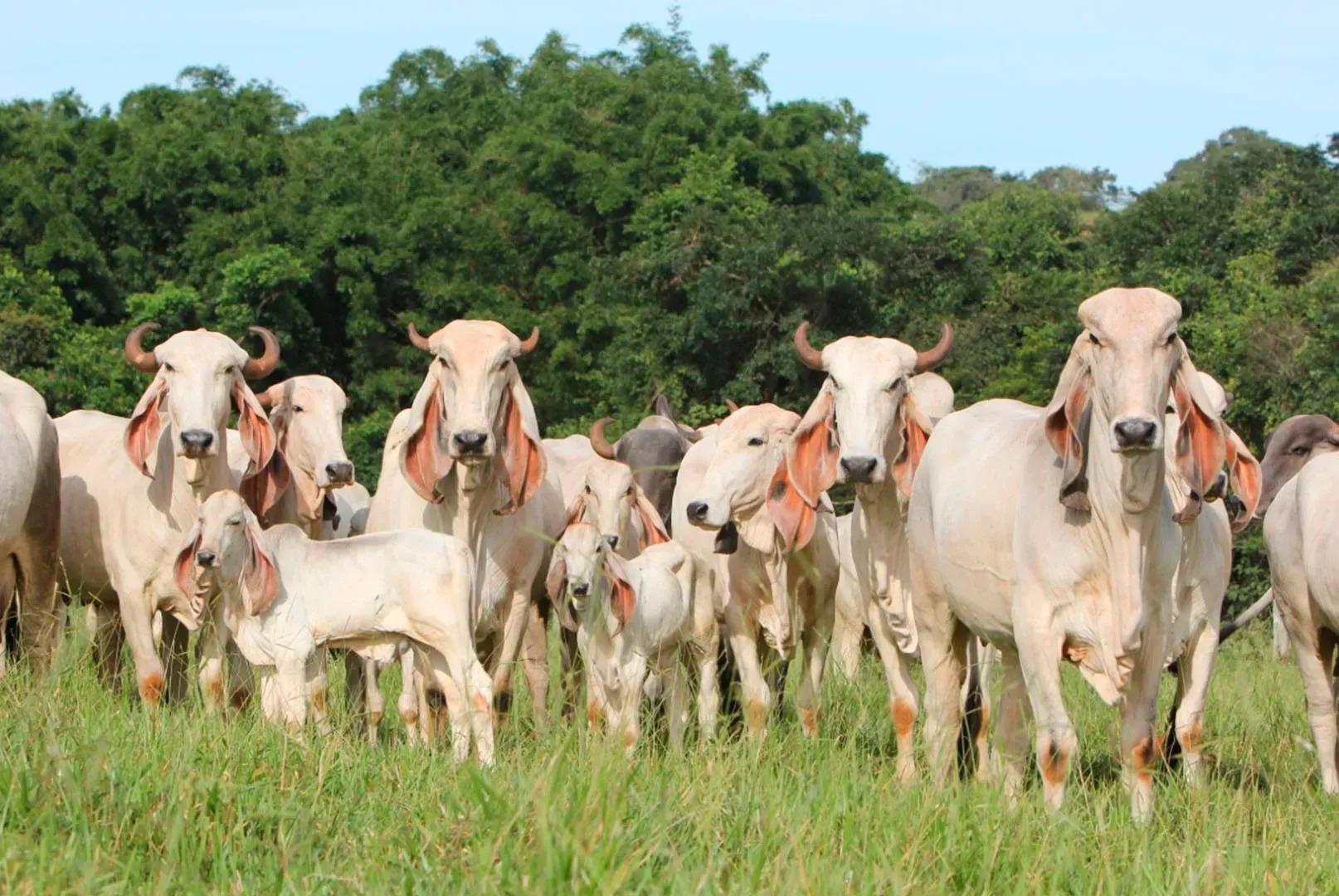
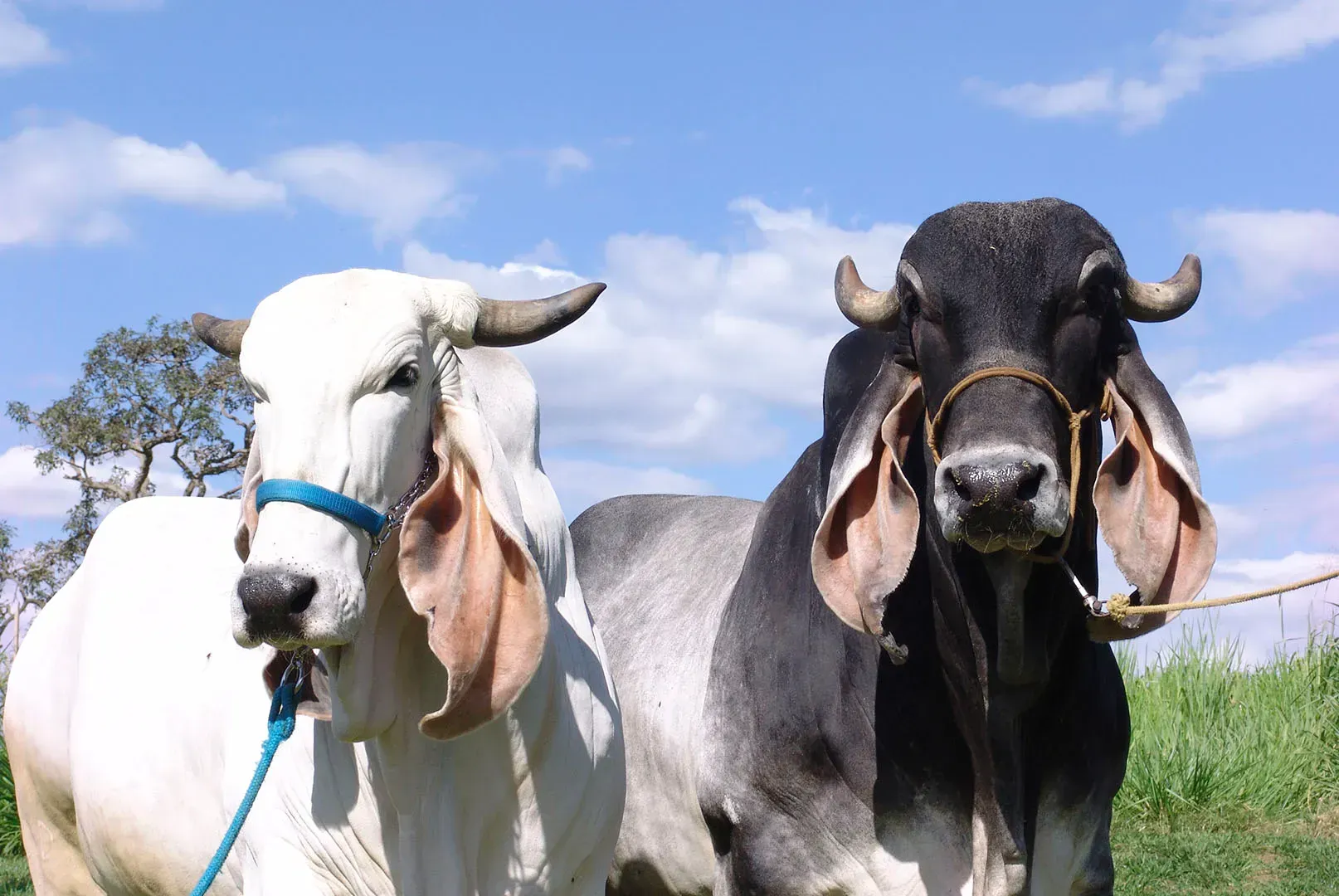
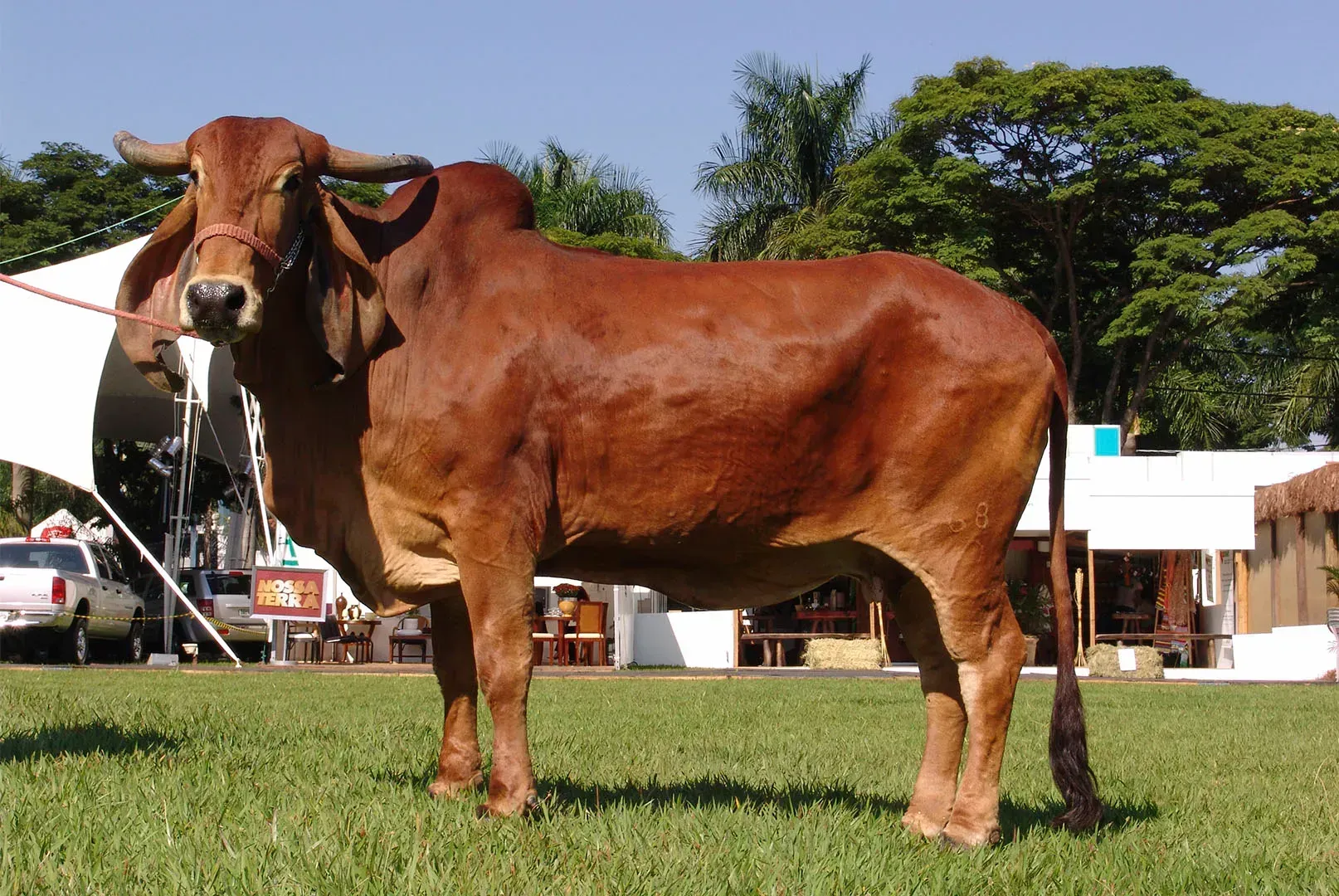
Indubrasil cattle are characterized by a medium-sized head, a slightly convex profile, and long, drooping ears. Their coat is white, gray, or red, always over dark, well-pigmented skin.
Average weight of 500 to 700 kg for females and 700 to 1,000 kg for bulls. Height of 135 to 150 cm for cows and 145 to 155 cm for bulls. Coat color: bay, from lightest to darkest, with white tones; it can also be gray, tan, or yellow. The hair is short, fine, silky, and shiny. Skin is soft and oily. Mucous membranes are black.
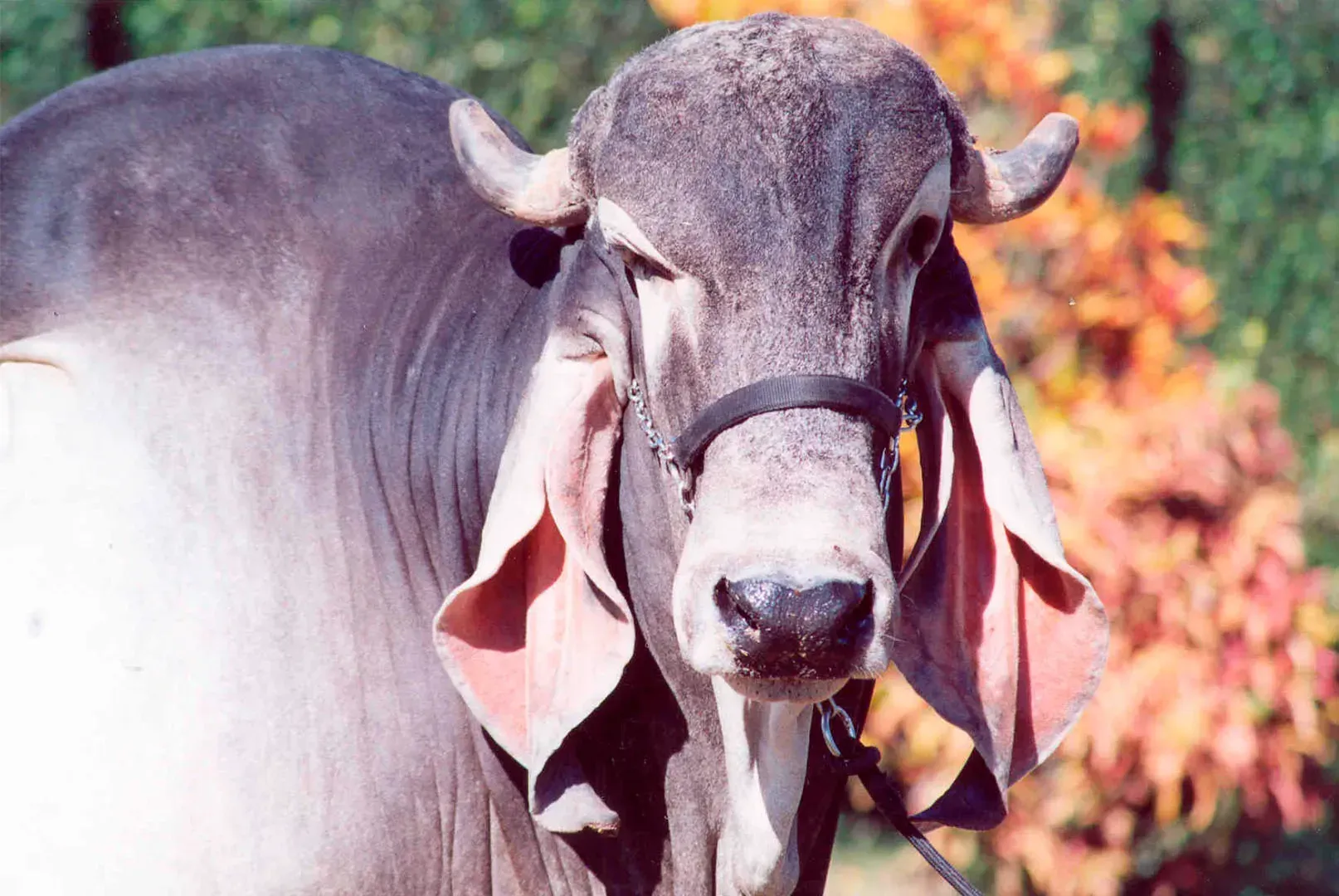
Strong head, almost straight profile, most commonly convex, intermediate between that of the Guzerá and the Gir. The forehead is broad. The face should be short and tapering towards the muzzle, which should be broad, with open nostrils. The ears should be medium-sized, but large ears are common, of variable shape, but frequently spread and facing forward, with lateral movements, as relaxed as those of the Gir. The eyes are large, gentle, and oblique.
The horns are of medium size, thick at the base and thin towards the tips, with a shape ranging from that of the Gir breed, extending well to the rear, almost like that of the Guzerá breed in a lyre shape, but never vertical.
Short, thick neck in bulls, medium in cows, preferably with little dewlap. Long, compact, voluminous body, parallelepiped-shaped. Small, firm hump, cashew-shaped. Broad, straight, muscular, level back. Long, wide rump, as horizontal as possible. Long tail, tapering to a point. Well-developed chest with prominent cheekbones.
Small, slightly sloping shoulders, well covered, well connected to the neck and back. Broad, deep chest, with well-defined, covered ribs, without depression. Belly line as straight as possible. Full flanks, rump well-set and full. Rumps quite muscular and deep. Regular udder.
Strong, upright, short limbs with good musculature above the hooves. The Indubrasil breed's bone structure is somewhat excessively thick, which gives it a tendency towards coarse limbs.
Advantages
The breed stands out for several qualities, such as excellent weight gain, maternal ability, feed conversion, docility, hardiness, good carcass yield, excellent performance in feedlots, and high heterosis in crossbreeding.
It is worth noting that it is a dual-purpose breed with high heterosis in crossbreeding (hybrid vigor of crossbreds, when compared to synthetic breeds).